샤플 이용료 80% 지원 받기

Management is about directing people, tasks, and resources toward a clear organizational goal — and making sure the effort actually translates into results. In a store environment, that means knowing who is responsible for what, staying on top of progress, and catching problems before they escalate. This guide is written for store managers, supervisors (SVs), and operations leads who want to move from reactive firefighting to consistent, structured management.
"Administration" focuses on keeping things in order — tracking staff, sales, and tasks so nothing falls through the cracks. Management takes that further: it's about connecting day-to-day operations to goals and actively driving results, not just maintaining the status quo.
As Peter Drucker put it in Management: Tasks, Responsibilities, Practices, the role of management is "to make organizations perform." That means it's not about watching over people — it's about creating an environment where your team can do their best work, and building the processes that turn effort into outcomes.
Management is about organizing and aligning tasks, people, and information to hit a target. Leadership is about setting a direction and inspiring your team to follow. Store managers and SVs need both — but they serve different purposes. The key is knowing when to lead and when to manage, and applying each where it's needed most.
In retail, food service, and service industries, management spans several core areas:
When these rely entirely on individual judgment and experience, quality changes the moment a key person changes — and that inconsistency becomes a recurring problem.
▪︎ Instructions Don't Land — and Following Up Takes Too Much Time
Even when HQ or a store manager sends clear instructions, "I didn't get that" or "we did it differently" happens far too often. When directives rely on verbal handoffs or paper notes, the time spent chasing confirmation eats into the manager's day — and errors still slip through.
▪︎ Every Store Does It Differently
You can hand every store the same manual, but how it gets applied on the floor depends entirely on who's running the shift. "That location runs smoothly, but this one keeps struggling" is a sign that management practices haven't been standardized — not that one team is simply better than another.
▪︎ You Only Find Out About Problems After They've Already Happened
Responding to a customer complaint after it's been filed. Spotting an operational issue in the Monthly Report after it's already cost you. Reactive management means problems are always a step ahead of you — and the time spent on follow-up and damage control adds up fast. Catching warning signs early requires access to the right information at the right time, not a week later.
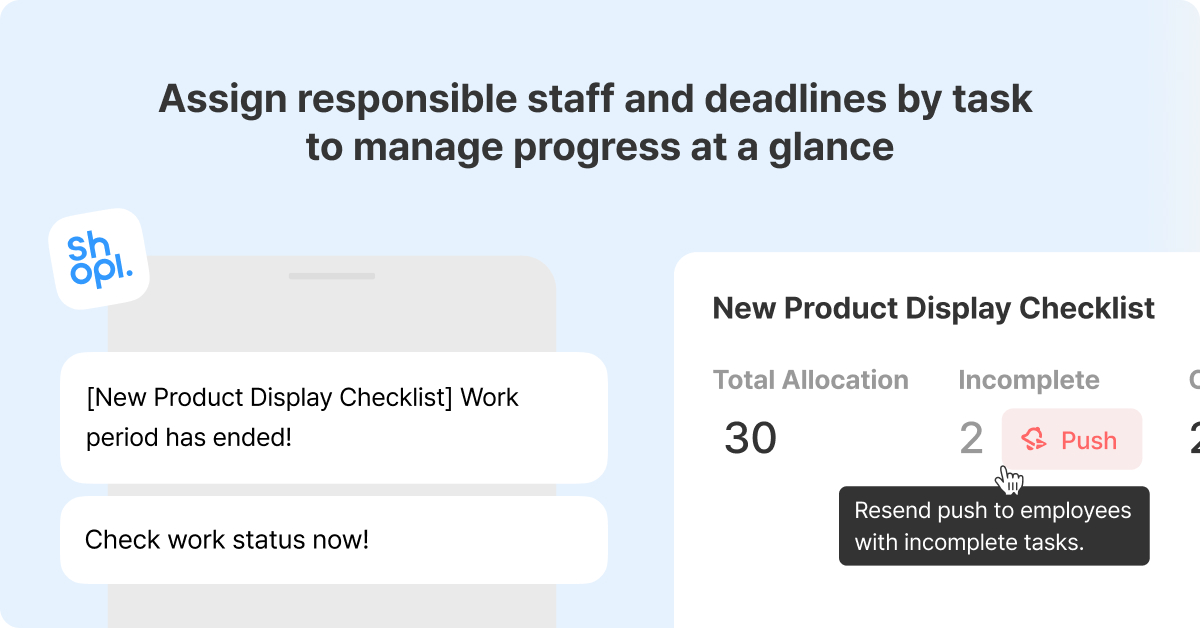
When it's unclear who is responsible for a task and when it needs to be done, nothing gets followed up properly — and managers end up spending their time chasing people rather than managing operations. Defining "who does what by when" is the foundation of any functional store management system.
Shopl's To-do feature makes this concrete: each task is assigned to a specific person with a clear deadline, and progress is visible at a glance. When HQ or an SV sends a task to a store, accountability is built in from the start — no more guessing whether it was picked up or completed.
▸ Set It Once, Assign Automatically: A Smarter Way to Manage Recurring Tasks >
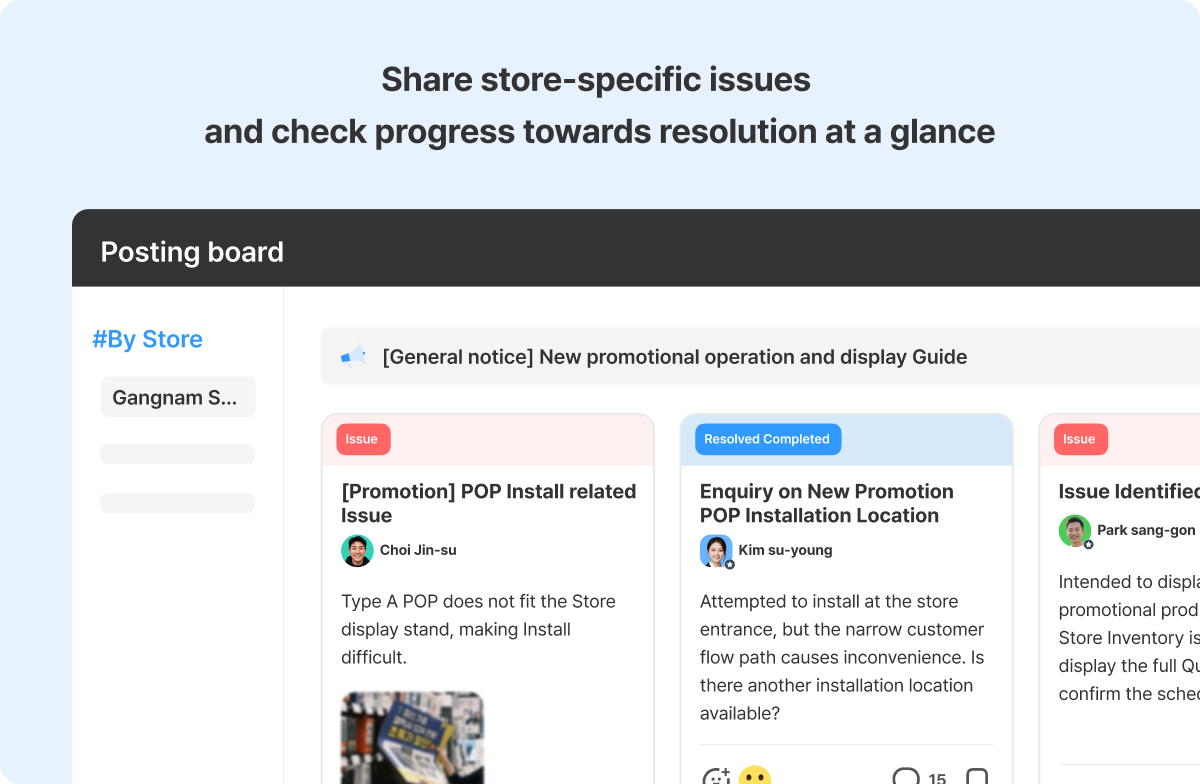
A manager shouldn't have to call each store individually to find out whether something has been done. The goal is a system where task Status — in progress, Completed, or not started — is visible without any back-and-forth.
Shopl's Posting board feature lets store teams log Issues as they come up, record how they're being handled, and track resolution progress over time. SVs and HQ can see the current Status of Issues across multiple stores in one view, making it easy to spot what needs attention and step in before things escalate. This reduces the Admin burden of chasing updates while also enabling earlier detection of recurring problems.
▸ How Supervisors Track Field Issues from Report to Resolution with Board >
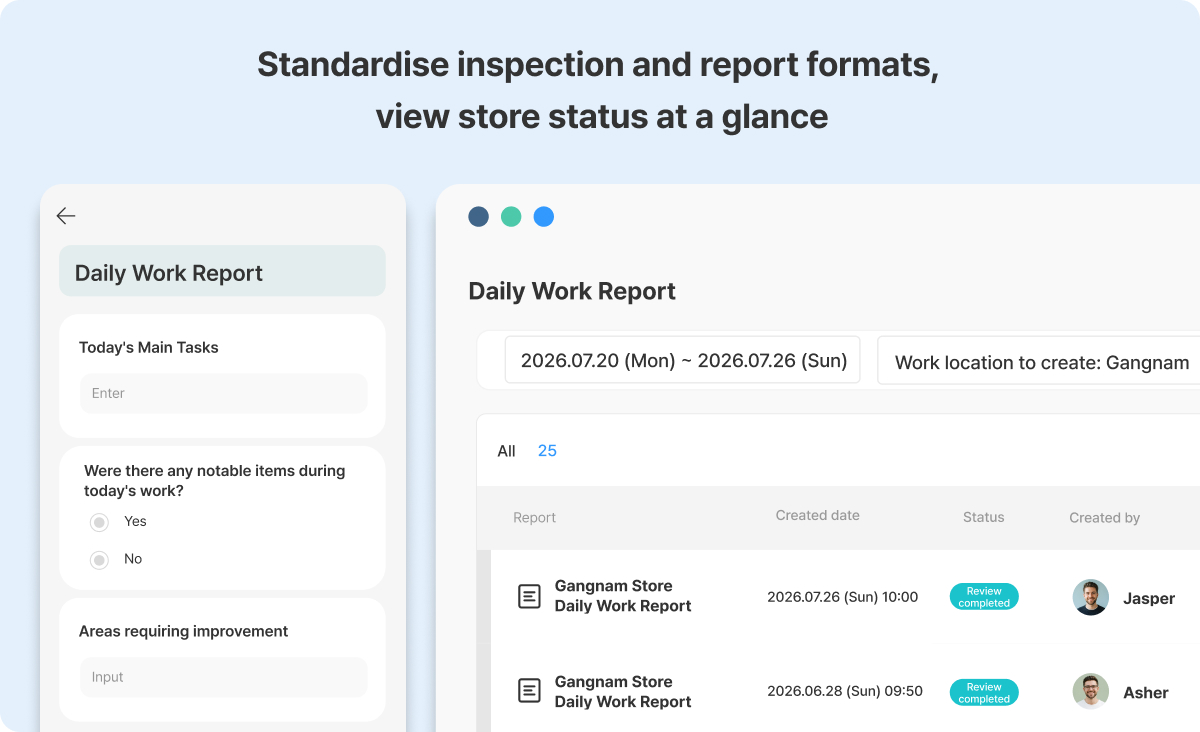
Standardizing Checklists and task procedures — so that every store operates to the same Criteria regardless of who's on shift — is what makes management sustainable at scale, not just in your best-performing locations.
Shopl's Report feature lets you build a Report format with the exact Items you need and assign it to the right people on the right Schedule. When every store uses the same Report structure for inspections and operational updates, HQ can compare results across locations on equal footing — and inconsistent reporting becomes a thing of the past.
▸ Build Custom Report Forms for Every Task >
A. A store manager owns everything that happens within one store — sales, budget, team development, and day-to-day quality. An SV's job is broader: they move across multiple stores, identifying gaps, making sure company direction is being followed, and supporting improvement where it's needed. The store manager keeps the engine running; the SV makes sure all engines are running the same way.
A. Especially small stores. When you're running lean, every person carries more weight — which means if one key person leaves or is absent, the whole operation can unravel. Even simple structures like a shared Checklist or a written role breakdown can make a small team far more resilient and consistent.
A. The biggest gain is visibility without extra effort. When updates happen over WhatsApp or verbal check-ins, details get missed and there's no record to refer back to. With a dedicated tool, who did what and when is captured automatically — so managers spend less time chasing Status updates and more time acting on what they see.
Good store management isn't just about telling people what to do and checking that it happened. It's about making sure every member of the team knows what they're responsible for, giving managers real visibility into what's happening on the floor, and ensuring work gets done to a consistent standard — no matter which store or which shift.
As you grow from one store to many, managing by memory and instinct stops working. Defining clear ownership, making progress visible, and standardizing how work gets done are what keep operations stable at scale.
Shopl gives you the tools to put all of this into practice digitally — so store managers and SVs spend less time hunting for Status updates and more time focused on what actually moves the business forward. Build the kind of management structure where your team knows what to do, and you can see it getting done.