샤플 이용료 80% 지원 받기
%20%E1%84%8A%E1%85%A5%E1%86%B7%E1%84%82%E1%85%A6%E1%84%8B%E1%85%B5%E1%86%AF.jpg)
This template includes employee details, issue, policies, required improvements, acknowledgment, and signature fields. Customize it to fit your company!


A warning letter works best when it focuses on specific facts and clear expectations — not emotional judgments.
Every warning letter should include
The way warning letters are issued — how many warnings are required, whether employees have a chance to respond, and what happens next — varies depending on your company policy and local employment law. Before drafting a letter, check your employee handbook, disciplinary policy, or HR guidelines to make sure you're following the right steps.
If the situation could lead to a final warning or termination, involve your HR team or a legal advisor before proceeding.
Writing the letter is only part of the job. You also need to confirm that the employee actually received and reviewed it. Handing over a printed copy or sending a file by email doesn't always create a clear record.
If your policy requires a signature, log whether the employee signed. If they refuse to sign, follow your internal procedure to document that fact — for example, by having a witness note the refusal on the document.
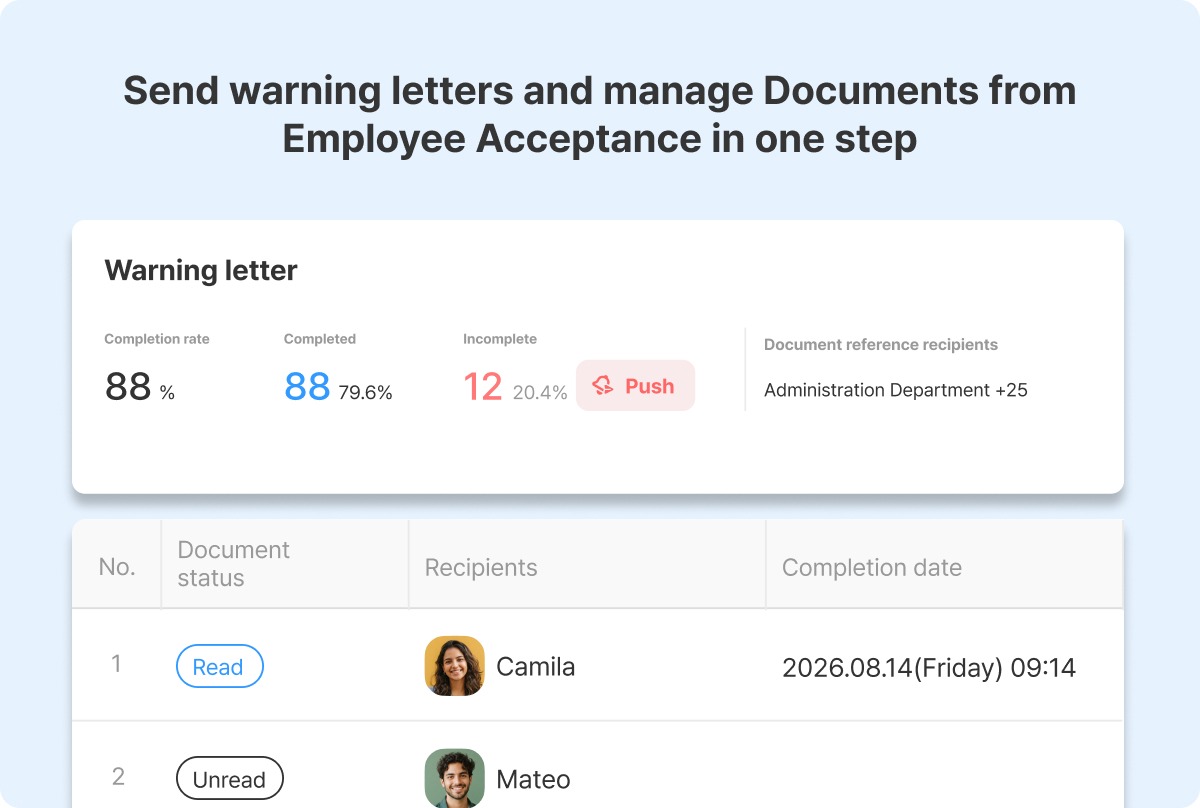
Still printing warning letters, emailing attachments, and manually tracking who's confirmed receipt?
With Shopl's [e-document] feature, you can send your existing warning letter templates to employees digitally, see whether they've opened the document, and send a reminder if needed — all from one place.
If a signature is required, you can add a signature field and collect it digitally. Completed documents are stored by employee, so past warning letters are easy to find when you need them.
If you want to cut the back-and-forth — from sending to confirmation to filing — try Shopl's e-document feature.