샤플 이용료 80% 지원 받기

Use this job offer letter template to organize key employment terms and give candidates a clear, consistent offer before they join.


A job offer letter should clearly communicate the key employment terms a candidate needs to know before joining. Keep it specific to what actually applies to that person.
Not every item applies to every hire. Only include what's relevant to that specific role and person—don't pad the letter with conditions that don't apply.
Before the letter goes out, verify the core details: job title, salary, working hours, and start date.
If the recruiter and the site manager are each working from different information, that confusion will carry through to the candidate. This is especially common in multi-location organizations. Put a simple internal process in place so it's clear who approved which terms before anything is sent.
Only include terms that are finalized. For items like bonuses or incentives that come with conditions, spell out the criteria as clearly as possible—don't leave room for interpretation.
Sending the letter is only part of the process. You also need to know whether the candidate has actually accepted.
Be clear about the deadline and how they should respond. Include any next steps—documents to submit, onboarding prep—so there's a clean handoff from offer to first day.
When you're hiring across multiple locations or bringing on a large number of people at once, tracking acceptance by email and individual files gets messy fast. A proper system for knowing who accepted, who hasn't responded, and what documents have been submitted saves your HR team from chasing everything down manually.
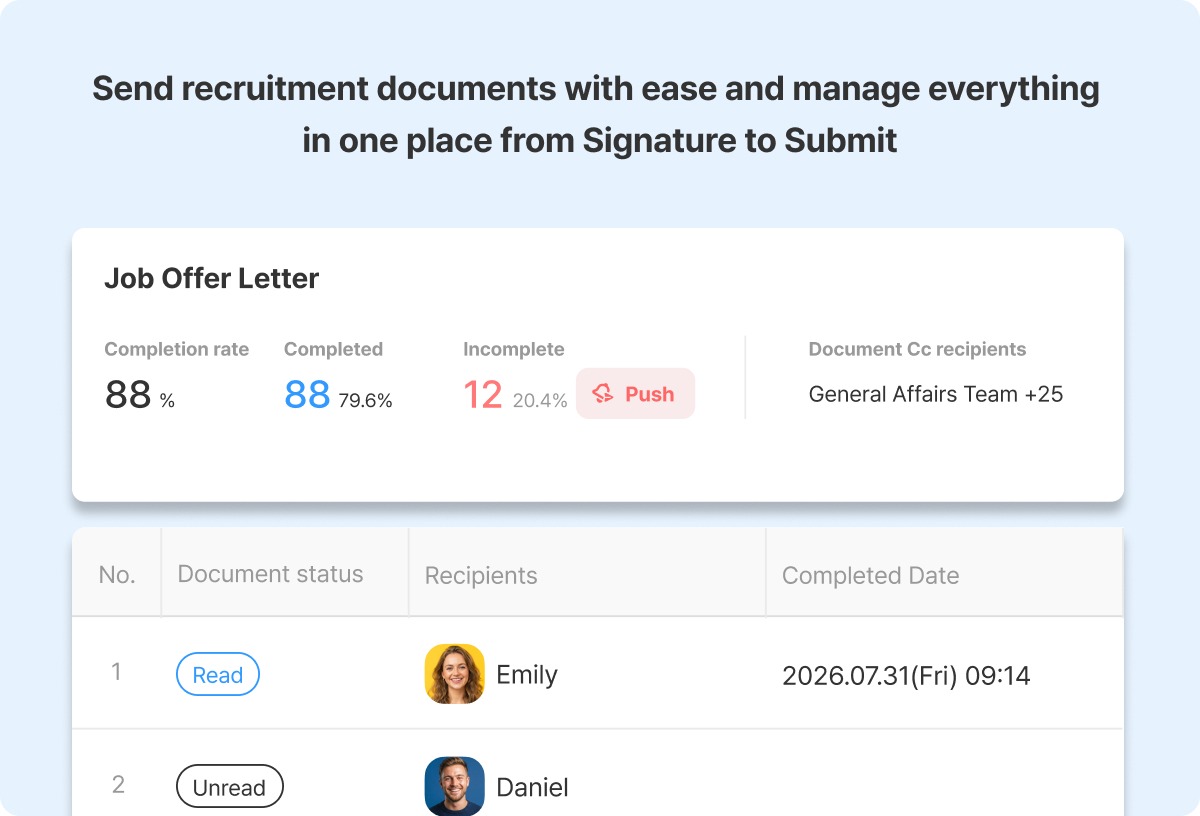
A job offer letter is the starting point—but once someone's hired, there's an ongoing set of employment documents to manage.
Shopl's [e-document] feature lets HR teams turn existing document templates into digital forms, collect signatures and stamps, and track submission status—all in one place. You can send reminders for outstanding documents and download completed files whenever you need them.
If you're currently managing HR documents across multiple locations using email threads and individual files, centralizing everything in Shopl makes day-to-day document management significantly easier.