샤플 이용료 80% 지원 받기
In retail and service environments, staff shortages and high turnover aren't abstract HR problems — they show up every shift. Wellbeing management is the practice of putting employees' physical, mental, and social health at the center of how a business is run, with the understanding that sustainable performance depends on it. This guide walks through the core concepts and practical steps store managers and operations teams can act on today.
The World Health Organization defines wellbeing as a state of complete physical, mental, and social health. Wellbeing management treats sustaining that state for employees not as a perk, but as a core business priority.
Across many markets, the conversation has shifted well beyond benefits packages. Governments and regulators are building wellbeing indicators into policy frameworks, reviewing how workplace health is measured, and tightening mental health and occupational safety standards. What's driving this isn't just compliance — it's the recognition that how work is designed, how workplaces are structured, and how information flows between teams are all factors that directly affect whether people stay healthy and stay in their jobs.
These three concepts are often used interchangeably, but they measure different things.
Wellbeing goes beyond asking "are employees happy with their jobs right now?" It asks a harder question: "Can people work here sustainably, over the long term, without burning out?" That broader lens is what makes it a strategic concern, not just an HR one.
In retail, food service, and hospitality, the cost of hiring keeps climbing while turnover shows no sign of slowing. Industry data consistently puts turnover rates in these sectors well above the cross-industry average — both for full-time staff and part-time workers. Every departure means recruitment costs, lost institutional knowledge, and added pressure on the team that stays.
Mental health data tells an equally serious story. Workplace mental health incidents and burnout-related departures have been rising year over year in many markets. These numbers point to a clear conclusion: trying to solve retention problems through pay alone has its limits. The quality of the working environment itself is increasingly what makes or breaks whether people stay.
When employees leave, pay is rarely the whole story. Working conditions, workplace relationships, and day-to-day stress consistently rank among the top reasons people quit. The pressure often builds quietly — not from a single incident, but from friction that accumulates shift after shift. For example:
None of this shows up on a Pay slip. But it shapes how employees answer the question they're constantly asking themselves: "Does this workplace actually value me?" Wellbeing management starts by making these invisible pressures visible — and then doing something about them.
Before you can fix what's wrong, you need to see it clearly. That means building a system where what's actually happening on the floor — who's doing what, how often, and how long it takes — gets recorded, not just estimated. Surveys and one-on-ones are valuable, but without a baseline of daily operational Data, it's hard to pinpoint where the real pressure points are.
When tasks are left to whoever notices them, the same reliable employees end up carrying a disproportionate load — and others drift. Documenting tasks clearly, assigning ownership, and setting expectations for when things get done prevents that imbalance. Standardization isn't just an efficiency measure — it's a fairness measure. When people know their role and trust that others know theirs, the psychological safety of the team improves alongside the operational reliability.
When Store problems never reach head office, and head office decisions never land on the floor, both sides end up frustrated. That gap erodes trust fast. The fix isn't getting people to communicate harder — it's building a system where information moves reliably by default. Daily reports, check records, and Task completion updates that head office can view in real time eliminate the guesswork on both ends.
Even a well-designed system needs revisiting — Store conditions change, teams turn over, and new friction points emerge. Scheduling regular reviews to look back at records, redefine what's working and what isn't, and Update the approach accordingly is what turns wellbeing management from a one-time initiative into an ongoing operational discipline.
Training programs, perks, and team events can all be effective — but rolling them out before understanding what's actually causing stress on the floor often backfires. Employees can tell when an initiative is a response to real feedback versus a top-down box-checking exercise. Start by identifying the specific friction points employees are experiencing, then design programs that address those directly.
If you're running multiple locations, rolling out a new system across every Store at once carries real risk. Running a structured pilot at one or two Stores first — learning what works, what needs adjustment, and what the rollout actually requires — dramatically increases the chances that the wider rollout lands well. The feedback from Store managers and staff in the pilot is what makes the difference between a program that spreads successfully and one that stalls.
"This Store runs well because of that one manager" is not a sustainable model. When Schedule management, Task assignment, record-keeping, and reporting all depend on one person's knowledge and effort, the operation is fragile. Building systems that work regardless of who's on shift is the operational foundation that makes wellbeing management last.
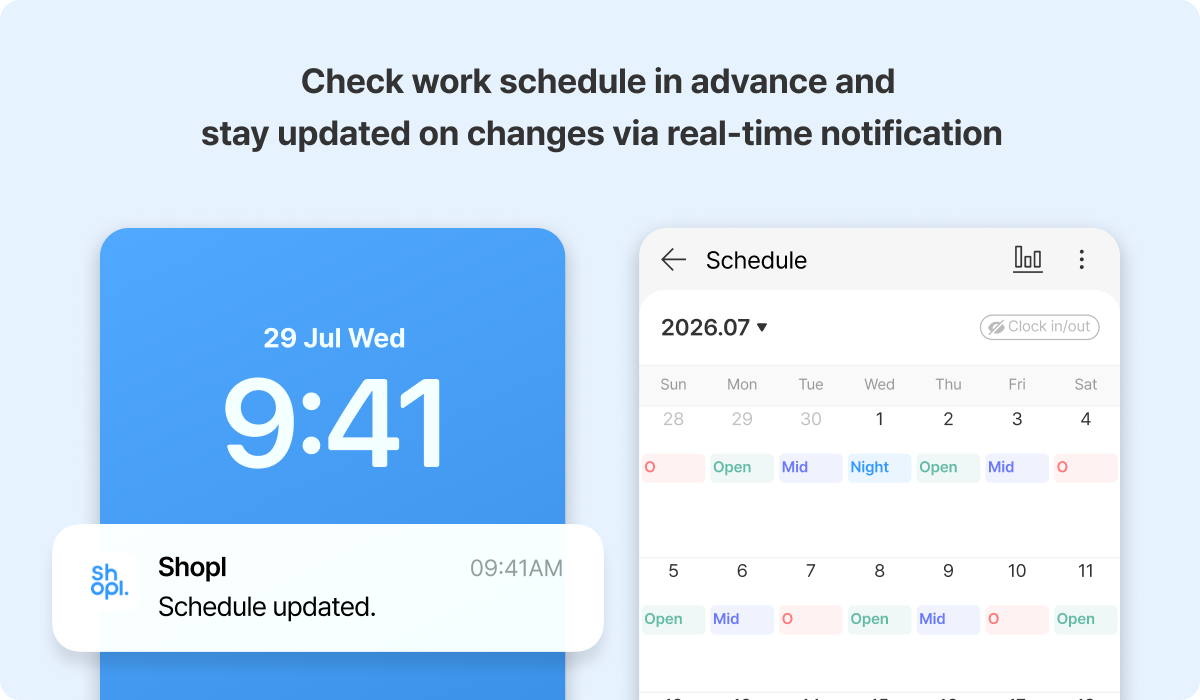
When shift schedules come out late or keep changing at short notice, employees don't just struggle to plan their work — they struggle to plan their lives. That unpredictability is a slow drain on morale and trust.
Shopl's Schedule feature lets managers publish shifts in advance and gives employees instant mobile access to their schedule in both calendar and List views. When changes do happen, real-time Notifications mean no one is caught off guard. Managers can Auto-generate recurring shift patterns using Templates, cutting the time spent building schedules from scratch while keeping rosters stable and consistent.
Knowing what's coming — even a week or two out — gives employees a sense of stability that's hard to put a number on, but easy to lose.
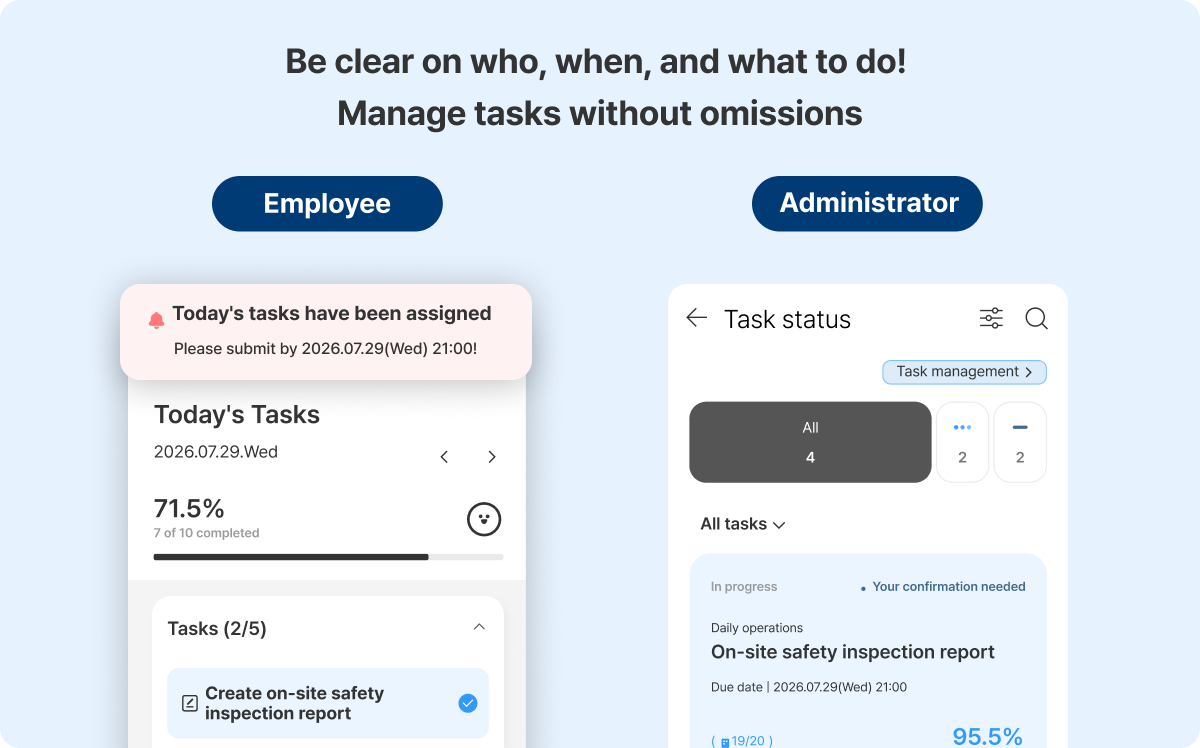
In Stores where tasks get handled by whoever happens to notice them, two things tend to happen: some employees end up doing far more than their share, and some tasks simply don't get done. Neither is acceptable, and both erode team morale over time.
Shopl's To-do feature lets Admin and head office assign tasks with clear ownership and Due dates, and track completion Status in real time — no follow-up calls required. Recurring tasks can be set to auto-assign on a schedule using Templates, so routine responsibilities get distributed consistently without anyone having to remember to delegate them.
When every team member knows what they're responsible for — and managers can see at a glance what's been done — the "I didn't know" and "I thought someone else was handling it" moments stop happening. Accountability becomes part of the system, not a conversation you have to initiate.
▸ Set It Once, Assign Automatically: A Smarter Way to Manage Recurring Tasks >
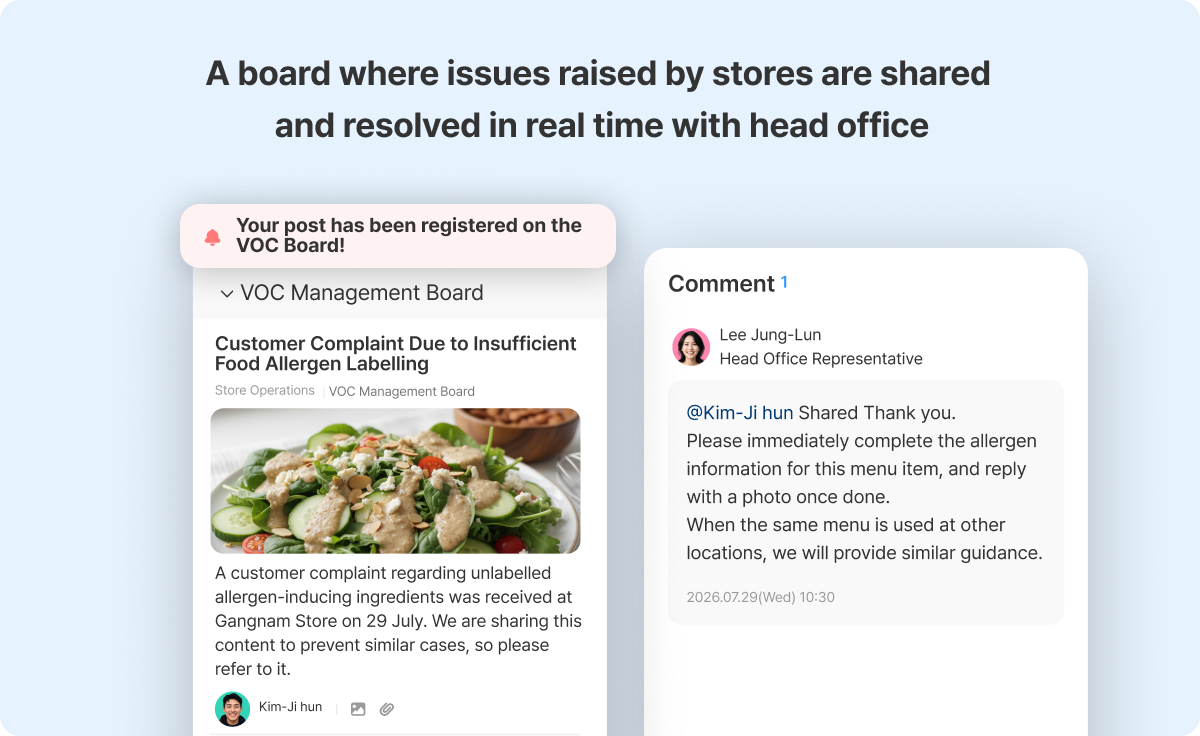
Shopl's Posting board creates a dedicated, searchable space where Store teams can log operational issues and improvement ideas — and where those records stay visible and accessible over time. Instead of a concern being raised once and forgotten, it becomes something that can be tracked, responded to, and followed up on.
When employees see that what they raise actually gets addressed, the culture shifts. People start speaking up earlier, problems get caught before they escalate, and managers spend less time discovering issues after the fact. The Posting board can also serve as a space to Share recognition and wins — which goes a long way toward building the kind of team culture where people want to stick around.
▸ Build a Recognition Culture with a Social Feed for Praise and Feedback >
A. Not at all. Smaller multi-location operators often see results faster — because each employee's experience has a more direct impact on overall Store performance, the effects of even modest improvements are immediately felt. You don't need a formal program or a large budget to start. Clarifying task ownership and establishing a reliable information-sharing system is enough to begin making a real difference.
A. Surveys are a useful starting point, but they only tell you how employees feel — not why. Without operational Data to cross-reference (task completion rates, scheduling patterns, report records), it's difficult to trace satisfaction scores back to their root causes. Combining survey Results with day-to-day operational Data gives you a much clearer picture of where to focus and what to change.
A. Requirements vary by market and are evolving. In many jurisdictions, formal stress or mental health assessments are mandatory for employers above a certain headcount threshold, with smaller operations subject to recommended-practice guidelines that are progressively becoming enforceable obligations. Regardless of where legal requirements currently sit, proactively monitoring team wellbeing — through regular check-ins, operational Data review, and open feedback channels — is good practice at any scale. Always verify the Latest requirements with your relevant local authority or labor regulator.
Wellbeing management doesn't require a sweeping organizational overhaul or a significant budget. It starts with something more fundamental: making sure employees understand their role, can see how their work contributes, and feel that the organization actually has their back. Build that foundation, and improved retention and team stability tend to follow.