샤플 이용료 80% 지원 받기
%2520for%2520Retail%2520A%2520Practical%2520Guide%2520for%2520Store%2520Teams.jpeg)
In retail environments, hazards don't announce themselves. A spill near the checkout, a ladder wobble during shelf stocking, a cart left in a blind corner — these situations happen fast, and they happen to any team. KYT (Kiken Yochi Training) is a structured safety practice that helps teams spot hidden hazards before a shift begins, agree on countermeasures together, and build habits that prevent accidents on the floor. In stores where customer service, merchandising, heavy receiving, and register work all overlap in the same space, the ability to anticipate risk — not just react to it — is what keeps people safe. The core method is the 4-Round approach: identify hazards, narrow down the critical ones, agree on actions, and set a concrete team commitment.
KYT — short for Kiken Yochi Training — is a team-based safety method that uses real workplace images or on-site scenarios to get everyone asking the same question: "What could go wrong here?" Rather than handing staff a rulebook to memorize, KYT turns hazard awareness into a conversation. The goal is to build a team where every employee can recognize danger on their own, without waiting to be told.
The real measure of KYT isn't how many safety posters are on the wall — it's whether the person stocking shelves at 7 a.m. catches the risk before it becomes an incident.
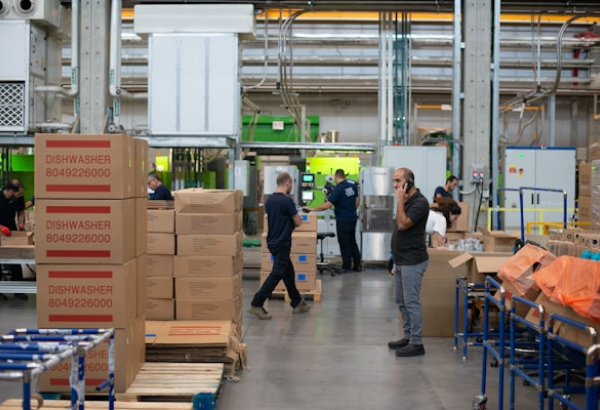
In a typical retail Store, multiple types of work happen simultaneously: greeting customers, restocking high shelves, receiving heavy deliveries, handling cleaning chemicals, maneuvering carts through narrow aisles. The hazards aren't static — they shift with every task, every hour, every team configuration.
Safety manuals cover the rules, but they can't replicate the judgment that comes from discussing real scenarios as a team. KYT bridges that gap — giving staff a structured way to surface and talk through the specific risks they'll actually face that day.
The 4-Round method breaks hazard awareness into four clear steps — each one building on the last. It translates directly to retail Store operations.
▪︎ Round 1: Identify Hazards
Using a photo, illustration, or a real area of your Store, ask the team to call out anything that looks risky. There are no Correct or Incorrect answers here — the goal is volume and openness. Creating an environment where every member of the team feels comfortable speaking up is what makes this round work. Examples from retail: "Someone could slip on a liquid spill near the registers" or "Reaching for stock from the top rung of a ladder could cause a fall."
▪︎ Round 2: Prioritize
From the list generated in Round 1, the team narrows it down to one or two hazards that matter most. The process of reaching that agreement together — discussing why one risk outweighs another — is what deepens understanding. It's not just about picking a winner; it's about building shared judgment.
▪︎ Round 3: Plan Countermeasures
For each priority hazard, the team comes up with specific, actionable responses. The key here is framing: instead of "try not to…" or "be careful of…", push for concrete actions — "We will always do X before Y." Action-based language makes it far easier to follow through.
▪︎ Round 4: Set Team Commitment
The team selects one action to commit to for that shift and declares it together. For example: "Before using any ladder for shelf stocking today, we call out a verbal confirmation to each other — every time." Putting the commitment into specific, observable words is what turns a discussion into a behavior change on the floor.
KYT doesn't have to take 30 minutes. You don't need to run all four rounds every time. Starting with just Rounds 1 and 2 during your morning huddle — focused on a single topic — is a realistic and effective way to begin. A tighter scope also means less pressure on participants, making it easier for the habit to take hold.
For newer or less experienced team members, real photos or short video clips from your own Store make it much easier to visualize hazards than abstract descriptions. Start by having a full-time lead or supervisor run the session, then gradually hand facilitation over to other staff members as they get comfortable. For multilingual teams, visual-heavy materials with minimal text go a long way.
A KYT session that isn't documented doesn't compound over time. Record what was discussed — the hazards identified, the countermeasures chosen, the team commitment — and schedule regular reviews (monthly, or whatever fits your operations). When you can look back at past sessions, patterns emerge: recurring hazards, shared blind spots, areas where training needs to go deeper.

When every Store runs KYT differently and records it on its own template, comparing results across locations becomes nearly impossible. With Shopl's Report feature, you can standardize the submission format across all Stores and Request submission directly from each location. Head office can see in real time which Stores have completed their KYT and which haven't — without sending individual follow-up messages to each manager. Completed Reports can also be Downloaded for use in Store-level safety activity summaries.

When a KYT session surfaces a hazard that others need to know about, that information shouldn't stay in one Store. Shopl's Notice and Survey features let you send safety updates to specific Stores or Employee groups right away. You can see who has read the Notice in real time and re-send Notifications to anyone who hasn't — so important safety information doesn't fall through the cracks. Surveys can also be used to gather hazard Reports or Employee input from the field when you need it.

The value of KYT drops sharply if the team commitment from Round 4 never makes it into actual daily work. With Shopl's Task feature, you can assign the safety actions agreed on in KYT directly to specific Employees or Stores. Recurring safety checks can be scheduled on a set cadence, and once a Representative submits their completion, the Admin can track progress and Results across locations. This closes the loop between what the team commits to in KYT and what actually happens on the floor — with visibility to back it up.
A. You can run it with as few as three people. With a small group, one person typically takes on the facilitator role while still participating. In fact, smaller teams often generate more discussion per person since everyone gets more airtime. While five to six participants is a common benchmark, KYT works well in small-format Stores too.
A. Anywhere from 10 to 30 minutes, depending on how you run it. If you're integrating it into a pre-shift huddle, start with a single-topic session covering just Rounds 1 and 2 — that can easily fit in 10 minutes. A full four-round session typically runs 20 to 30 minutes. As your team gets more comfortable, you can build toward a complete weekly session, expanding scope gradually rather than all at once.
A. The key responsibilities at the corporate level are standardizing how KYT is run, creating a consistent recording format, and building a system to track and compare results across locations. When each Store runs KYT its own way, it's nearly impossible to spot cross-location patterns or measure overall safety performance. By setting a shared topic rotation, establishing a standard submission format, and scheduling regular reviews of Store-level activity, corporate teams can turn individual Store efforts into a coordinated safety program that improves over time.
KYT doesn't require special equipment or outside expertise — it's a practice you can Start in Tomorrow's pre-shift huddle with a single question and a team willing to talk honestly about what could go wrong. Pick one hazard scenario, discuss it together, and make one concrete commitment for the shift. That's where it begins. Over time, as you build a record of past sessions, recurring risks become visible, common gaps surface, and your safety program gets sharper with every cycle.







%2520for%2520Retail%2520A%2520Practical%2520Guide%2520for%2520Store%2520Teams.jpeg)