샤플 이용료 80% 지원 받기

A digital retail audit checklist app streamlines store operations by automating inspection processes, ensuring compliance, and providing real-time reporting capabilities. Unlike traditional Excel-based methods, modern audit apps offer photo documentation, multi-location management, and automated analytics that significantly improve audit efficiency and accuracy.
Traditional retail audits often rely on paper checklists or basic Excel templates, creating numerous operational challenges. Manual data entry leads to inconsistencies across different locations and audit teams, making it difficult to maintain standardized inspection criteria.
Store managers frequently struggle with time-consuming audit processes that pull them away from customer-facing activities. Paper-based systems make it nearly impossible to track audit progress in real-time, leaving district managers without visibility into compliance issues until weeks after inspections are completed.
Data collection becomes fragmented when auditors use different formats or skip sections due to unclear instructions. This inconsistency makes it challenging to identify patterns or implement systematic improvements across retail locations.
Inefficient audit processes create significant hidden costs for retail operations. Manual audits typically take 2-3 times longer than digital alternatives, increasing labor costs and reducing productive selling time on the floor.
Poor audit documentation leads to compliance failures that can result in regulatory fines, failed brand standard assessments, and lost franchise agreements. When audit results are delayed or incomplete, corrective actions get postponed, allowing small issues to become major operational problems.
The lack of historical data analysis prevents retailers from identifying recurring issues or measuring improvement trends. Without proper tracking, stores often repeat the same compliance mistakes, wasting resources on ineffective solutions.
Effective retail audits must evaluate visual merchandising standards that directly impact customer experience and sales performance. Planogram compliance, product placement accuracy, and promotional display effectiveness require systematic assessment to maintain brand consistency.
Store layout audits should verify that high-traffic areas are optimized for product discovery and that customer flow patterns support cross-selling opportunities. Signage placement, lighting effectiveness, and cleanliness standards need regular monitoring to ensure they meet corporate guidelines.
Price accuracy checks are crucial for maintaining customer trust and preventing revenue loss. Digital audit apps can streamline price verification by integrating with POS systems and flagging discrepancies automatically.
Inventory audits focus on stock level accuracy, product freshness, and storage compliance. Out-of-stock situations and overstock conditions directly affect profitability and customer satisfaction, making regular inventory checks essential.
Product rotation procedures, expiration date monitoring, and damaged goods identification should be systematically evaluated. Storage area organization, including backroom efficiency and safety compliance, requires consistent assessment to prevent inventory shrinkage.
Receiving and stocking procedures need regular auditing to ensure products are processed correctly and shelved according to planogram specifications. Proper inventory management audits can reduce shrinkage by up to 15% when implemented consistently.
Staff performance audits evaluate customer service delivery, product knowledge, and adherence to company policies. Mystery shopper programs and direct observation assessments provide valuable insights into actual customer experiences.
Training compliance, uniform standards, and professional behavior should be monitored regularly to maintain brand image. Sales technique effectiveness and upselling performance require measurement to identify coaching opportunities.
Staff scheduling compliance and labor law adherence need systematic checking to avoid regulatory violations and ensure optimal coverage during peak hours.
Safety audits must cover fire safety equipment, emergency procedures, and workplace safety standards. OSHA compliance requirements and local safety regulations need regular verification to prevent accidents and avoid penalties.
Food safety standards, health department requirements, and product handling procedures require consistent monitoring in retail environments. Cleaning protocols, sanitization procedures, and equipment maintenance schedules should be audited systematically.
Security procedures, including cash handling, alarm systems, and theft prevention measures, need regular assessment to protect assets and ensure employee safety.
Excel templates can be effective for small retailers with single locations or limited audit requirements. Businesses with basic compliance needs and minimal reporting requirements may find spreadsheet-based solutions sufficient for their operations.
Organizations with strong Excel expertise and custom reporting needs might prefer the flexibility of spreadsheet-based systems. When audit frequency is low and standardization requirements are minimal, Excel templates can provide adequate functionality.
Excel-based audits struggle with scalability as retail operations grow. Version control becomes problematic when multiple users access and modify spreadsheets across different locations and time periods.
Data integrity issues arise when formulas are accidentally modified or deleted. Photo documentation requires separate file management, making it difficult to associate images with specific audit findings.
Offline accessibility limitations and synchronization challenges make Excel templates impractical for field auditors who need reliable data access in various retail environments.
Modern audit apps should support offline data collection with automatic synchronization when connectivity is restored. Built-in photo capture capabilities with GPS tagging and timestamp verification ensure comprehensive documentation of audit findings.
Voice-to-text functionality and barcode scanning integration can significantly speed up data entry processes. Custom form builders allow organizations to create audit checklists that match their specific operational requirements.
Digital signature capture and supervisor approval workflows ensure proper authorization and accountability throughout the audit process.
Advanced reporting features should include customizable dashboards, trend analysis, and comparative performance metrics. Automated alert systems can notify management immediately when critical compliance issues are identified.
Integration capabilities with existing POS systems, inventory management platforms, and HR systems provide comprehensive operational insights. Export functionality for regulatory reporting and executive presentations should be standard.
Predictive analytics features help identify potential compliance issues before they become serious problems, enabling proactive management approaches.
Centralized user management with role-based permissions ensures appropriate access control across different organizational levels. Standardized audit templates with location-specific customizations maintain consistency while accommodating unique requirements.
Bulk scheduling and assignment features streamline audit planning for multiple locations. Performance comparison tools help identify best practices and areas for improvement across the retail network.
Geographic mapping and route optimization features can improve audit efficiency for field teams covering multiple locations.

Audit frequency should be determined based on risk levels, compliance requirements, and operational complexity. High-traffic locations and new stores typically require more frequent auditing than established, well-performing locations
Seasonal variations in business activity should influence audit scheduling to ensure assessments occur during representative operational periods. Critical compliance areas may need monthly reviews, while less critical aspects can be audited quarterly.
Surprise audits combined with scheduled inspections provide a comprehensive view of actual operational performance versus prepared presentations.
Comprehensive training programs should cover audit objectives, specific checklist requirements, and proper documentation procedures. Standardized training materials ensure consistency across different audit teams and locations.
Regular refresher training and certification programs help maintain audit quality and adapt to changing requirements. Video training modules and interactive simulations can improve learning retention and practical application.
Performance feedback and coaching sessions help audit teams improve their assessment skills and maintain objectivity throughout the process.
Effective audit programs require systematic follow-up procedures to ensure identified issues are properly addressed. Clear timelines and accountability measures help guarantee that corrective actions are completed promptly.
Priority classification systems help managers focus on critical issues first while ensuring minor problems don't get overlooked. Progress tracking capabilities monitor correction implementation and verify effectiveness.
Regular review meetings and status updates maintain momentum and demonstrate management commitment to continuous improvement.
System selection should involve key stakeholders from operations, IT, and management to ensure all requirements are properly addressed. Pilot testing with a small group of locations helps identify potential issues before full-scale rollout
Data migration from existing systems requires careful planning to maintain historical audit information. User account setup and permission configuration should be completed before training begins.
Integration testing with existing systems ensures seamless data flow and prevents operational disruptions during the transition period.
Phased implementation approaches reduce risk and allow for adjustments based on early feedback. Training schedules should accommodate operational requirements without disrupting normal business activities.
Support resources and help desk capabilities need to be established before rollout begins. Communication plans should keep all stakeholders informed about implementation progress and timeline expectations.
Performance monitoring during initial rollout phases helps identify adoption challenges and provides opportunities for process refinement.
Compliance rate tracking should measure both overall performance and specific category improvements over time. Benchmark comparisons help identify top-performing locations and best practices that can be replicated across the organization.
Trend analysis reveals patterns in compliance issues and helps predict future problem areas. Statistical analysis of audit results provides insights into the effectiveness of corrective actions and training programs.
Regular performance reviews with location managers help maintain accountability and drive continuous improvement initiatives.
Return on investment calculations should include both direct cost savings and indirect benefits such as improved customer satisfaction and reduced compliance risks. Operational efficiency gains from streamlined audit processes contribute significantly to overall ROI.
Risk mitigation value from prevented compliance violations and reduced insurance costs should be factored into ROI assessments. Customer satisfaction improvements and increased sales from better operational standards provide measurable financial benefits.
Long-term cost reductions from improved operational consistency and reduced management oversight requirements contribute to sustained ROI improvement.
Q. How often should retail stores conduct audits?
A. Most retail stores should conduct comprehensive audits monthly, with critical safety and compliance checks performed weekly. High-volume locations or stores with previous compliance issues may need bi-weekly assessments, while well-established, consistently performing locations might operate effectively with quarterly comprehensive audits supplemented by monthly spot checks.
Q. Can small retailers benefit from audit apps?
A. Absolutely. Small retailers often see the greatest proportional benefits from digital audit apps because manual processes consume a larger percentage of their limited management time. Even single-location retailers benefit from consistent documentation, photo evidence for insurance claims, and streamlined compliance reporting. Many audit apps offer scaled pricing that makes them accessible to smaller operations.
Q. What's the typical cost of retail audit checklist apps?
A. Retail audit app pricing typically ranges from $30-$150 per location per month, depending on features and user count. Enterprise solutions with advanced analytics may cost $200-$500 per location monthly. Most providers offer volume discounts for multiple locations and annual payment plans that reduce costs by 15-25%.
Q. How do you ensure audit consistency across multiple locations?
A. Consistency is achieved through standardized digital checklists, mandatory photo documentation, and centralized training programs. Digital audit apps automatically enforce completion requirements and scoring criteria, while supervisor review workflows ensure quality control. Regular calibration exercises where multiple auditors assess the same location help identify and correct scoring variations.
Q. What happens if stores fail audit checks repeatedly?
A. Repeated audit failures typically trigger escalated intervention procedures, including increased audit frequency, mandatory retraining programs, and management coaching. Most retailers implement progressive improvement plans with specific timelines and consequences. Persistent non-compliance may result in operational restrictions, franchise agreement reviews, or management changes, depending on the severity and nature of the failures.
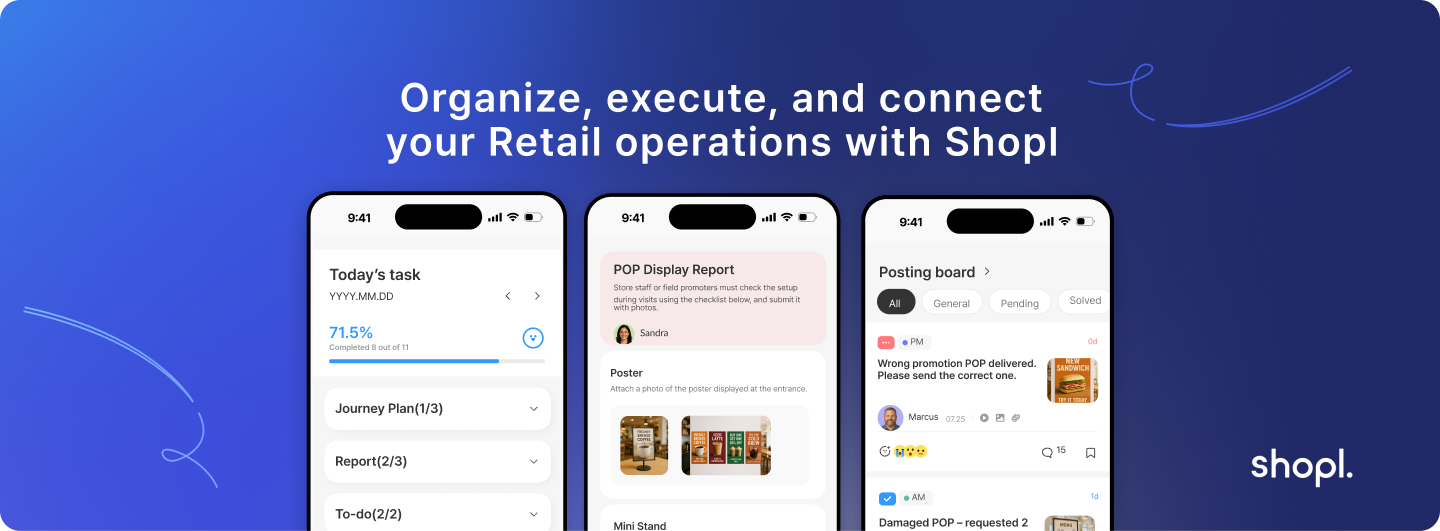
For retail operations looking to modernize their audit processes, Shopl offers comprehensive workforce management solutions that can streamline store operations beyond traditional audit functions. Our platform integrates scheduling, task management, and operational reporting capabilities that complement audit programs by providing real-time visibility into store performance and staff accountability. Visit our features page to explore how integrated operational management can enhance your retail audit effectiveness.
Implementing a digital retail audit checklist app represents a strategic investment in operational excellence that pays dividends through improved compliance, reduced costs, and enhanced customer experiences. The transition from manual processes to automated systems requires careful planning and stakeholder buy-in, but the long-term benefits of consistent, data-driven auditing make this transformation essential for competitive retail operations. Success depends on selecting the right technology platform, training teams effectively, and maintaining commitment to continuous improvement throughout the implementation process.