샤플 이용료 80% 지원 받기
Store visibility strategy combines strategic product placement, optimized traffic flow, and consistent display execution to maximize product exposure and drive sales performance. Effective visibility programs typically increase sales conversion by 15-25% while reducing inventory turnover time through better product discovery and customer engagement throughout the store journey.
When customers can't find what they're looking for within the first few seconds of entering a section, you're losing sales before they even begin. Most retail operations teams face this challenge daily: perfectly stocked shelves that somehow fail to drive the expected sales performance. The difference lies in how well your products capture attention and guide customers through their purchasing journey.
This guide provides actionable strategies and proven techniques to transform your store visibility approach, helping you maximize product exposure while creating a shopping experience that naturally leads to higher conversion rates.
Poor visibility creates a ripple effect that extends far beyond missed individual sales. When high-margin items remain hidden behind competing products or poorly positioned displays, your profit margins suffer while inventory sits longer than necessary. Most store teams underestimate how quickly visibility gaps compound into significant revenue loss.
A poorly positioned display can reduce product sales by 40-60% compared to optimal placement. This becomes particularly costly with seasonal items or promotional products where timing directly impacts profitability. Additionally, customers who can't find what they need quickly often abandon their entire shopping trip, not just the specific item search.
The operational cost includes increased staff time spent helping customers locate products, higher return rates from customers who grabbed incorrect items in frustration, and the opportunity cost of prime retail space generating suboptimal returns.
Visibility gaps typically occur during three critical moments: store entry decision-making, aisle navigation, and impulse purchase opportunities. Each gap represents a distinct revenue loss pattern that compounds throughout the day.
During peak shopping hours, customers make purchasing decisions within 7-10 seconds of spotting relevant products. When your key items aren't immediately visible from main traffic paths, you're essentially removing them from consideration. This is especially problematic for promotional items where customers expect easy discovery.
Cross-selling opportunities depend entirely on visibility strategy. Products that should naturally pair together need strategic placement that makes the connection obvious to shoppers. Stores with optimized cross-merchandising visibility see 20-30% higher basket values compared to traditional category-only arrangements.
Strategic Product Placement Fundamentals
Eye-level placement remains the most valuable real estate in any retail environment, but effective visibility strategy extends well beyond the obvious premium positions. Understanding your customer's natural browsing patterns helps determine which products deserve prime positioning versus secondary support locations.
High-velocity products need consistent, predictable placement that customers can locate quickly during repeat visits. Place these items at eye level or slightly below (chest to waist height) where they're immediately accessible without requiring customers to reach or bend significantly.
Seasonal and promotional products benefit from end-cap placement or dedicated feature areas that break the normal browsing pattern. These locations work because they interrupt the customer's routine, forcing attention toward new or special offerings. However, avoid overusing these premium spots, as customers begin ignoring areas that change too frequently.
Traffic Flow and Customer Journey Mapping
Map your store's natural traffic patterns before deciding on visibility improvements. Most customers follow predictable paths that you can leverage for strategic product exposure. Understanding these patterns helps you position products where customers are most receptive to discovery.
Primary traffic lanes should feature your highest-margin items or products that encourage additional purchases. Secondary lanes work better for planned purchases or specialty items where customers specifically seek them out. Place impulse items along checkout paths where customers have time to browse while waiting.
Consider how different customer types move through your space. Quick-trip customers follow different patterns than browsers, and your visibility strategy should accommodate both without creating conflicts or congestion points.
The power wall concept focuses your highest-impact products along the most visible wall surfaces, typically the right-side wall as customers enter. This area receives the most extended viewing time because customers naturally move counterclockwise through retail spaces and spend longer looking right than left.
Position products 48-72 inches from the floor for optimal eye-level visibility across different customer heights. This range ensures accessibility while maintaining clear sightlines throughout the area. Avoid placing small or detailed products too high where customers can't examine them properly.
Create depth within your power wall displays by using varied heights and angles rather than flat, uniform presentations. Products angled 15-20 degrees toward traffic flow appear more prominent and invite customer interaction. This technique works particularly well for featured items or promotional products.
Aisle end-caps generate 30-35% more attention than mid-aisle placements, making them ideal for promoting specific products or creating themed displays. Use these premium positions for items that benefit from impulse purchases or need extra visibility to meet sales targets.
Cross-merchandising requires understanding natural product relationships and placing complementary items within the same sight line. Position related products within 3-5 feet of each other so customers can see both options simultaneously. This works especially well for accessories, add-ons, or seasonal combinations.
Maintain clear sight lines down each aisle by keeping displays below 54 inches in height. This allows customers to see deeper into the space and helps staff monitor the entire area effectively. Wide aisles with good visibility reduce customer stress and encourage longer browsing times.
Different areas of your store require specific display approaches that match customer behavior and expectations in each zone. Entrance zones need bold, simple displays that immediately communicate key messages or special offers without overwhelming new arrivals.
Department zones work best with educational displays that help customers understand product differences or benefits. Use clear signage and logical product progression that guides customers from basic to premium options without pressure.
Checkout areas should focus exclusively on impulse items under $20 that customers can evaluate quickly. Avoid complex decisions or large items that slow down the checkout process or require extended consideration.
Overcrowding displays reduces individual product visibility and overwhelms customers with too many choices. Most effective displays feature 3-7 items maximum, allowing each product adequate space and attention. More than this creates visual noise that reduces overall effectiveness.
Inconsistent pricing or promotion signage confuses customers and reduces trust in your displays. Every promotional display needs clear, visible pricing that customers can read from their normal shopping position. Avoid small print or complicated offer terms that require extended reading.
Poor lighting dramatically reduces display effectiveness, especially for products with important visual details or color variations. Ensure adequate lighting reaches all display areas and consider how shadows from overhead fixtures might hide product features during different times of day.
Weekly Visibility Audit Checklist
Conduct visibility audits during your busiest shopping periods to understand how customers actually interact with your displays under real conditions. Peak-hour audits reveal problems that empty-store reviews miss entirely.
Your weekly audit should cover these critical areas:
Document specific issues with photos and locations rather than general notes. This creates accountability and helps track improvement over time.
Start with your highest-traffic, lowest-performing areas where small changes generate the biggest impact. These locations typically include main entrance views, primary aisle intersections, and checkout approach areas.
Relocate top-margin products to eye level if they're currently positioned too high or low. This single change often produces measurable sales increases within days. Focus on products with good profit margins rather than just popular items.
Remove visual obstacles that block sightlines to important product areas. This includes unnecessary signage, oversized displays, or equipment that interrupts customer views of merchandise. Clean sight lines immediately improve navigation and product discovery.
Improve lighting in dark corners or poorly illuminated display areas. Simple lighting adjustments can increase product visibility by 40-50% without requiring major renovations or significant investment.

Sales per square foot by display area provides the clearest indicator of visibility effectiveness. Track this metric monthly for each major display zone to identify underperforming areas that need attention. Compare similar areas across different time periods to measure improvement impact.
Customer traffic patterns and dwell time reveal how well your visibility strategy guides customer behavior. Areas with good visibility should show steady traffic flow without congestion or confusion patterns. Monitor locations where customers frequently ask staff for help finding products, as these indicate visibility gaps.
Inventory turnover rates by product placement help identify whether visibility improvements translate into actual sales performance. Products in high-visibility positions should show faster turnover than identical items in standard locations.
Conversion rate by store section measures how effectively each area turns browsers into buyers. Areas with good product visibility should consistently outperform sections with standard merchandising approaches.
Digital compliance monitoring helps maintain consistent visibility standards across multiple shifts and team members. This becomes essential for stores with high staff turnover or complex display requirements that change frequently.
Photography-based compliance tracking allows you to monitor display execution remotely and identify issues before they significantly impact sales. Weekly compliance photos from consistent angles help spot gradual changes that daily staff might not notice.
Integration with workforce management platforms can help ensure adequate staffing during display refresh periods and track completion of visibility-related tasks. This prevents displays from remaining incomplete or incorrect due to scheduling conflicts.
Develop location-specific visibility playbooks that account for unique store layouts while maintaining brand consistency. Cookie-cutter approaches rarely work because customer flow patterns vary significantly between locations, even within the same retail chain.
Create visual templates showing optimal product placement for each store format you operate. Include specific measurements, angles, and spacing requirements that store teams can follow without interpretation gaps. Templates should specify which products go where during different seasons or promotional periods.
Standard operating procedures should include visibility checks as part of regular opening, closing, and shift-change routines. This ensures consistent execution regardless of staffing changes or busy periods that might otherwise compromise display quality.
Train staff to recognize good versus poor visibility rather than just following rigid placement rules. This helps team members make better decisions when adapting to unexpected situations like product shortages or layout changes.
Role-specific training ensures each team member understands their visibility responsibilities. Floor staff need different skills than managers, and seasonal workers require simplified guidelines they can execute immediately without extensive training periods.
Regular refresh training prevents gradual degradation of visibility standards as staff become comfortable with shortcuts or develop habits that reduce effectiveness over time. Monthly visibility training sessions help maintain standards and introduce new techniques.
A. The optimal height range is 48-72 inches from floor level, with 54-60 inches being the sweet spot for most customers. This positions products at chest-to-eye level for average adult heights while remaining accessible for most shoppers. Premium products should claim the 54-60 inch zone, while secondary items can work effectively at 42-48 inches or 60-72 inches depending on your customer demographics.
A. End-cap displays should rotate every 2-4 weeks to maintain customer attention and prevent "display blindness" where shoppers stop noticing unchanged presentations. Main product placement should remain stable for 6-12 weeks to allow customers to develop familiarity with your layout. Promotional displays need more frequent changes (weekly for major promotions) while core merchandising benefits from consistency that builds customer confidence and shopping efficiency.
A. Relocating existing high-margin products to eye-level positions provides the fastest ROI without additional investment. Focus on products with good profit margins that are currently positioned too high or too low. Simple lighting improvements using LED spotlights cost under $200 per area but can increase product visibility by 40-50%. Removing unnecessary visual obstacles and cleaning sight lines also produces immediate improvement at zero cost.
A. Track sales per square foot before and after visibility changes for specific display areas or product categories. Compare month-over-month performance for products that received better placement versus those that remained in standard positions. Most effective visibility improvements show 15-30% sales increases within 4-6 weeks. Also monitor inventory turnover rates and customer assistance requests, as both should improve with better visibility execution.
A. Overcrowding displays remains the most common error, reducing individual product impact and overwhelming customers with too many choices. Small retailers also frequently underestimate lighting quality and place too many products above or below optimal sight lines. Another major mistake is inconsistent execution where good visibility principles are applied randomly rather than systematically throughout the store, creating confusion instead of improved shopping experience.
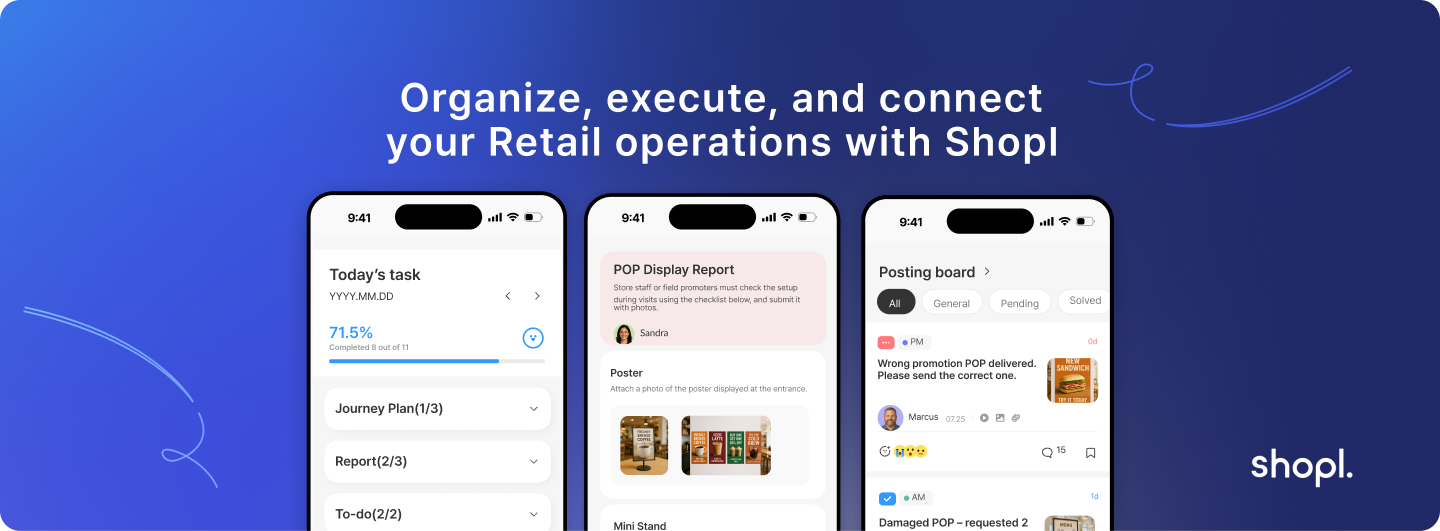
Modern retail operations require tools that help maintain consistent visibility standards across all locations and shifts. Shopl's retail execution platform includes features for display compliance monitoring, task management for visual merchandising teams, and reporting tools that track visibility-related performance metrics. Store teams can use mobile task management to ensure display standards are maintained during busy periods, while managers get real-time visibility into compliance across multiple locations.
The platform's photo documentation features help maintain consistent display execution by allowing teams to capture and share examples of proper product placement and visual merchandising standards. This becomes particularly valuable for multi-location retailers who need to scale visibility best practices across diverse store formats and team capabilities.
Effective store visibility strategy transforms browsing into buying by making the right products discoverable at the right moments throughout the customer journey. The key lies in understanding your specific customer flow patterns, implementing systematic visibility improvements, and maintaining consistent execution across all locations and time periods. Success comes from treating visibility as an operational discipline rather than a one-time merchandising exercise.
For more information about retail execution tools and visibility management features, visit Shopl.