샤플 이용료 80% 지원 받기
A resignation document is more than just a form employees submit before leaving a company.
Depending on the country, employment contract, and company policy, different resignation documents may have different meanings. What matters is not only the name of the document, but whether it is an informal notice, a formal resignation, or a confirmed agreement between the employee and employer.
For store and operations managers, handling resignations correctly is important because missed steps can lead to unclear handovers, scheduling issues, and unnecessary operational disruption.
Note: Resignation procedures, notice periods, and withdrawal rules vary depending on local employment laws, contracts, and company policies. Always follow your company's HR process and local requirements.
Resignation-related documents are often treated as the same thing, but they can serve different purposes depending on the situation.
Note: Unlike some countries where resignation documents have clearly defined categories, many English-speaking countries do not distinguish between multiple resignation documents by legal name. The actual effect depends on the content of the document, company procedures, and applicable employment rules.
Many resignations begin with a conversation between the employee and their manager.
At this stage, the employee is communicating their intention to leave and discussing possible timelines, such as the expected final working date.
Because nothing may be formally confirmed yet, managers should avoid treating an informal conversation as a completed resignation process.
A resignation letter is a written document that officially communicates an employee’s intention to leave the company.
Once submitted through the proper company process, it typically triggers the next steps, including confirming the final working date, arranging handover responsibilities, and completing required administrative procedures.
Managers should ensure the document is properly recorded and shared with the appropriate HR or headquarters team.
Resignation from a formal leadership position, such as a company officer or director role, may follow different procedures from a regular employee resignation.
These cases can involve additional corporate requirements, so managers should follow internal policies and consult the appropriate HR or legal team.
For a typical voluntary resignation, the process usually begins with a conversation between the employee and their manager.
A common workflow is:
Each company may have different procedures, so managers should always follow internal guidelines.
In cases such as restructuring, organizational changes, or other employer-related situations, companies may discuss different departure arrangements with employees.
Managers should be careful that the documents accurately reflect the situation.
If an employee leaves due to company decisions but the departure is recorded incorrectly as voluntary, it may affect future procedures or employee support depending on local regulations.
Notice periods differ depending on the country, employment contract, and company policy.
Rather than relying on general assumptions, managers should confirm the required timeline with HR.
Early confirmation helps stores prepare for:
The required format for resignation documents varies between companies.
Some organizations use paper forms, while others accept digital documents or email submissions.
The most important point is ensuring the resignation information is properly recorded and accessible to the relevant teams.
For standard voluntary resignations, employees often provide a simple reason such as personal reasons or career development.
However, if the resignation involves workplace concerns, disputes, or circumstances that may require future review, accurate records should be maintained.
Resignation documents should be submitted through the appropriate channel, such as:
In multi-location businesses, delays often happen when information remains only at the store level and does not reach headquarters quickly.
When a store manager or regional manager receives a resignation document, the first priority is not only receiving the document — it is making sure the information moves quickly.
Recommended steps:
Important: A frontline manager receiving a resignation document does not always mean the resignation process is officially completed. Managers should not independently decide whether a resignation is accepted or whether it can be withdrawn. These decisions should follow the company’s HR process.
When an employee asks to withdraw a resignation, managers should not make the final decision alone.
The appropriate response depends on:
The safest approach is to immediately involve HR and follow the company's process.
A resignation does not only affect administrative procedures.
For store-based businesses, employee departures can quickly impact:
If resignation information stays only with one manager or one store, headquarters may not be able to respond quickly.
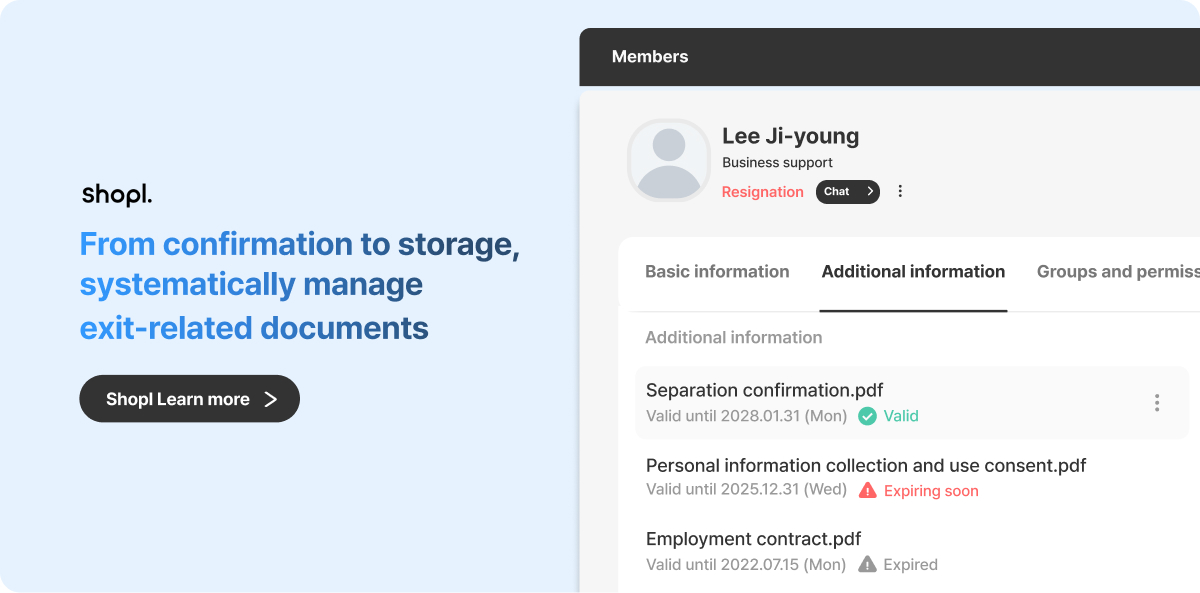
Resignation-related documents need clear tracking after submission.
With Shopl’s E-Documents feature, companies can manage internal documents digitally and track document confirmation status.
This helps prevent common problems caused by paper-based management, such as:
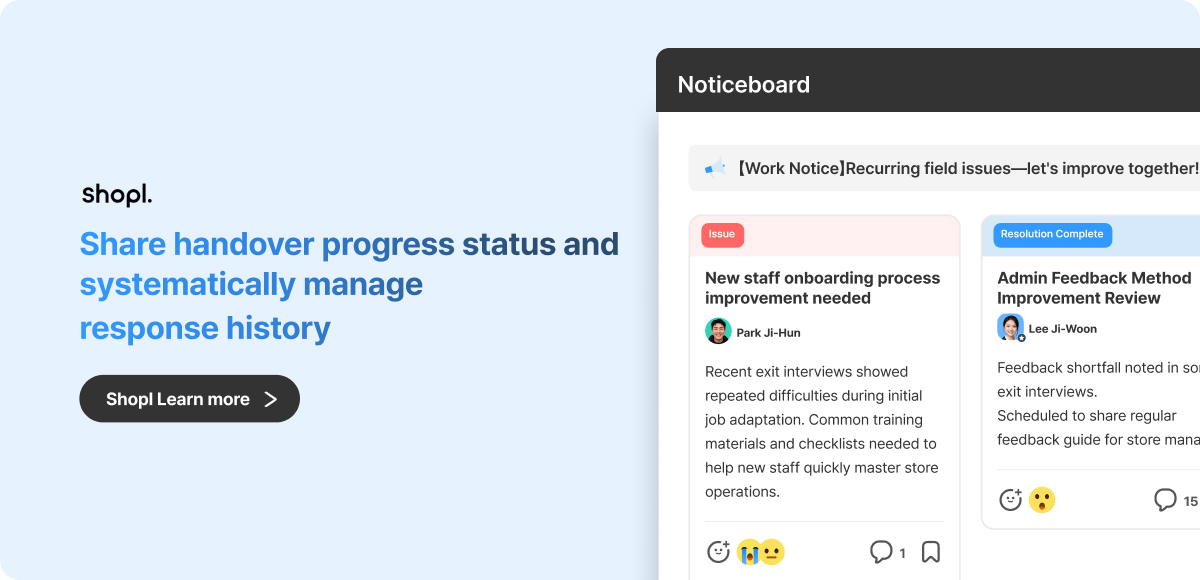
When an employee leaves, handover information needs to be shared between stores and headquarters.
With Shopl’s Posting Board feature, teams can organize handover information and track progress in one place.
Managers can see what needs to be completed, who is responsible, and what actions have already been taken. This reduces the risk of important operational knowledge being lost when employees leave.
Employee departures are not completed with a single resignation document.
From resignation confirmation to handover and scheduling adjustments, multiple teams need to stay aligned to keep operations running smoothly.
By creating a clear process for managing documents, responsibilities, and operational information, companies can reduce dependency on individual managers and maintain consistent store performance even when team members change.
Shopl helps store teams organize operational information, improve visibility between stores and headquarters, and build a more reliable process for managing employee transitions.