샤플 이용료 80% 지원 받기( ~ 4/21 마감)

Modern merchandiser tracking combines GPS technology, real-time monitoring, and performance analytics to optimize field operations and store execution. Digital tracking systems enable retailers to monitor visit completion rates, task compliance, and sales impact while providing merchandisers with mobile-friendly tools for efficient field management.
Today's merchandisers must navigate multiple digital platforms daily, from inventory management systems to mobile tracking apps. Essential digital literacy includes understanding cloud-based platforms, mobile app functionality, and basic data interpretation. Successful merchandisers can quickly adapt to new software interfaces and troubleshoot common technical issues independently.
Mobile device proficiency has become non-negotiable as most tracking systems operate through smartphone applications. Merchandisers need comfort with touch screen navigation, photo capture for compliance documentation, and real-time data entry. Understanding how to sync data across devices and work offline when connectivity is limited ensures consistent performance regardless of store location.
System integration awareness helps merchandisers understand how their daily activities connect to broader retail operations. When merchandisers grasp how their check-ins, task completions, and reports feed into corporate dashboards, they tend to maintain higher data quality and compliance rates.
Modern merchandisers don't just execute tasks—they interpret performance data to optimize their routes and strategies. Basic analytics skills include reading performance dashboards, identifying trends in store compliance, and understanding key metrics like visit frequency, task completion rates, and sales correlation data.
Report generation capabilities enable merchandisers to communicate effectively with management teams. This includes creating visual summaries of store conditions, documenting compliance issues with supporting photos, and providing actionable insights based on field observations. Merchandisers who can translate field data into business recommendations become valuable strategic partners rather than just task executors.
Data accuracy awareness ensures that merchandisers understand the importance of consistent, timely data entry. When field teams recognize how their data inputs affect inventory decisions, staffing allocations, and promotional strategies, they naturally maintain higher quality standards.
Smartphone proficiency extends beyond basic usage to include specialized retail applications, barcode scanning, and location services management. Successful merchandisers master features like GPS tracking, photo documentation, and offline data storage to maintain productivity across diverse store environments.
Cloud synchronization understanding helps merchandisers manage data flow between mobile devices and central systems. This includes knowing when and how data uploads occur, troubleshooting sync failures, and ensuring backup data storage for critical information.
Battery and connectivity management becomes crucial during long field days. Experienced merchandisers develop strategies for maintaining device functionality throughout extended routes, including portable charging solutions and understanding how different apps impact battery life.
GPS tracking provides accurate verification of store visits and route optimization insights. Modern systems use geofencing technology to automatically detect store arrivals and departures, eliminating manual check-in errors and providing precise time stamps for each location.
Location accuracy varies by environment, with indoor retail spaces sometimes requiring additional verification methods. Many systems combine GPS data with WiFi network detection or beacon technology to ensure reliable tracking within large shopping centers or multi-level retail complexes.
Route optimization algorithms use GPS data to suggest efficient travel patterns between assigned stores. These systems can reduce travel time by up to 20% while ensuring all required visits are completed within scheduling constraints.
Live activity feeds allow managers to monitor field team progress throughout the day without interrupting merchandisers with frequent check-in calls. Real-time dashboards display current locations, completed tasks, and upcoming scheduled activities for entire field teams on a single interface.
Instant notification systems alert managers to delays, missed visits, or urgent store issues requiring immediate attention. These systems prioritize communications to avoid information overload while ensuring critical situations receive prompt response.
Activity timestamps create detailed audit trails for compliance verification and performance analysis. When combined with photo documentation and task completion data, these records provide comprehensive field operation visibility.
Automated check-in processes reduce administrative burden while maintaining accurate visit records. Modern systems combine location verification with visual confirmation, requiring merchandisers to capture store-specific photos or scan unique identifiers to confirm their presence.
Task management interfaces organize daily responsibilities by store, priority level, and estimated completion time. Progressive task systems unlock subsequent activities only after prerequisite steps are completed, ensuring proper execution sequence and reducing errors.
Completion verification often includes multiple confirmation methods, such as before-and-after photos, barcode scans of completed work, and digital signatures from store managers when required.

Visit completion rates measure the percentage of scheduled store visits actually completed within designated timeframes. Industry benchmarks typically expect 95% or higher completion rates for established merchandising teams, with new team members achieving this standard within their first 90 days.
Task compliance tracking measures how completely merchandisers execute their assigned responsibilities. This includes setup accuracy, planogram adherence, and proper documentation of any deviations or issues encountered during visits.
Time efficiency metrics help identify opportunities for process improvement and training needs. Analyzing time-per-task data across different merchandisers reveals best practices that can be shared team-wide to improve overall productivity.
Planogram compliance scores measure how accurately merchandisers execute product placement directives. Digital tracking systems can compare actual shelf layouts against approved planograms using photo recognition technology, providing objective compliance scoring.
Price accuracy verification ensures that promotional pricing and shelf tags match current campaign requirements. Merchandisers typically use mobile scanning tools to verify pricing accuracy across assigned product categories during each store visit.
Inventory availability tracking documents out-of-stock situations, overstock conditions, and product rotation compliance. This data helps retailers understand supply chain effectiveness and identify stores requiring additional attention.
Sales correlation analysis examines the relationship between merchandising activities and store performance. Stores with regular merchandising support typically show 10-25% higher sales in supported categories compared to stores with irregular or no merchandising coverage.
ROI calculations consider merchandising program costs against incremental sales and improved operational efficiency. Most retail merchandising programs aim for 3:1 or higher return ratios, factoring in direct labor costs, travel expenses, and program management overhead.
Customer satisfaction metrics may include mystery shopper scores, online reviews mentioning product availability, and store manager feedback regarding merchandising quality and professionalism.
Platform selection should prioritize user-friendly mobile interfaces, reliable offline functionality, and seamless integration with existing retail systems. Successful implementations focus on simplifying rather than complicating daily workflows for field teams.
Scalability considerations include the ability to add new users, expand geographic coverage, and incorporate additional features without system disruption. Cloud-based platforms typically offer better scalability than on-premise solutions for growing retail operations.
Cost analysis should include not only licensing fees but also implementation costs, training expenses, and ongoing technical support requirements. Hidden costs often appear in data storage, custom integrations, and user support beyond initial platform pricing.
API connectivity enables data sharing between merchandising tracking systems and existing retail infrastructure. Seamless integration eliminates duplicate data entry while ensuring that field activities align with inventory management, promotional calendars, and operational schedules.
Data synchronization protocols determine how frequently information updates between systems and what happens when connectivity issues occur. Robust systems maintain local data integrity while queuing updates for transmission when connections are restored.
Security considerations include user authentication, data encryption, and compliance with retail industry privacy standards. Integration planning must address how sensitive information flows between systems while maintaining appropriate access controls.
Phased rollout approaches introduce new tracking systems gradually, allowing teams to adapt while maintaining operational continuity. Starting with pilot groups of experienced merchandisers helps identify potential issues before company-wide deployment.
Hands-on training sessions work better than theoretical presentations for field teams. Effective training includes practice with actual devices in simulated store environments to build confidence before real-world implementation.
Ongoing support systems provide field teams with accessible resources for troubleshooting common issues. This might include video tutorials, quick reference guides, and dedicated technical support contacts for urgent situations.
Change resistance often stems from concerns about increased monitoring rather than genuine technical difficulties. Transparent communication about how tracking data improves field support and recognition helps build team buy-in for new systems.
Device familiarity varies significantly among field teams, particularly in organizations with diverse age demographics. Providing adequate training time and pairing tech-savvy team members with those needing additional support creates a collaborative learning environment.
Demonstrating immediate benefits rather than long-term advantages helps accelerate adoption. When merchandisers see how tracking systems reduce paperwork, improve route efficiency, or provide better communication with management, they typically embrace the technology more readily.
Validation protocols should include both automated checks and human verification processes. Systems that flag unusual patterns, duplicate entries, or incomplete data help maintain database integrity without creating excessive administrative burden.
Error correction procedures must be straightforward and accessible to field teams. When merchandisers can easily correct mistakes or add missing information, data quality improves significantly compared to systems requiring management intervention for every change.
Regular data audits help identify systematic issues before they impact business decisions. Monthly reviews of completion rates, photo quality, and timestamp accuracy reveal training needs and system performance problems.
Privacy communication should clearly explain what data is collected, how it's used, and who has access to different information types. Transparency about monitoring purposes builds trust while addressing legitimate privacy concerns
Positive reinforcement programs use tracking data to recognize excellent performance rather than only identifying problems. Highlighting merchandisers who consistently achieve high completion rates and quality scores creates a culture where tracking supports rather than threatens team members.
Feedback loops ensure that tracking data leads to meaningful support for field teams. When merchandisers see that their reported challenges result in additional resources or process improvements, they view tracking systems as beneficial tools rather than surveillance mechanisms.
Artificial intelligence applications are beginning to analyze merchandising patterns and predict optimal visit scheduling. AI-powered systems can identify stores likely to need additional attention based on historical data, seasonal patterns, and current performance metrics.
Augmented reality tools may soon assist merchandisers with complex planogram execution and training. AR applications can overlay digital instructions onto physical shelf spaces, reducing setup errors and accelerating new product launches.
Internet of Things (IoT) sensors provide additional data layers beyond traditional tracking methods. Smart shelves, temperature monitors, and customer traffic counters can supplement merchandiser observations with continuous environmental data.
Modular system architectures allow retailers to add new features and capabilities without replacing entire platforms. Investing in flexible, API-driven solutions enables future expansion as business needs evolve and new technologies become available.
Data standardization ensures that tracking information remains usable as systems change and improve. Consistent data formats and naming conventions prevent information loss during system migrations and enable better long-term analytics.
Partnership strategies with technology vendors should include roadmap discussions and upgrade pathways. Understanding how tracking platforms plan to evolve helps retailers make informed long-term technology investments.
A. The most critical technical skills include mobile app proficiency, basic data analysis capabilities, and GPS/location services understanding. Merchandisers need comfort with smartphone applications for task management, photo documentation, and real-time reporting. Additionally, ability to interpret performance dashboards and understand how their field activities connect to broader retail metrics has become essential for career advancement.
A. Tracking systems improve store performance by ensuring consistent visit frequency, maintaining planogram compliance, and providing data-driven insights for optimization. Studies show stores with regular tracked merchandising support achieve 10-25% higher sales in managed categories. Real-time monitoring also enables faster response to inventory issues and compliance problems.
A. Prioritize user-friendly mobile interfaces, reliable offline functionality, and seamless integration capabilities with your existing retail systems. The platform should offer GPS accuracy, photo documentation features, and real-time dashboard visibility. Consider scalability, API connectivity, and total cost of ownership including implementation and ongoing support expenses.
A. Success requires transparent communication about benefits, hands-on training with actual devices, and phased rollout starting with experienced team members. Focus on demonstrating immediate advantages like reduced paperwork and better route optimization rather than long-term corporate benefits. Provide ongoing technical support and use tracking data for recognition rather than only problem identification.
A. Key metrics include visit completion rates (target 95%+), task compliance scores, time efficiency per store, and sales impact correlation. Quality indicators like photo documentation standards and store manager satisfaction scores provide additional performance insights. Track both efficiency metrics and business impact measures to ensure comprehensive performance evaluation.
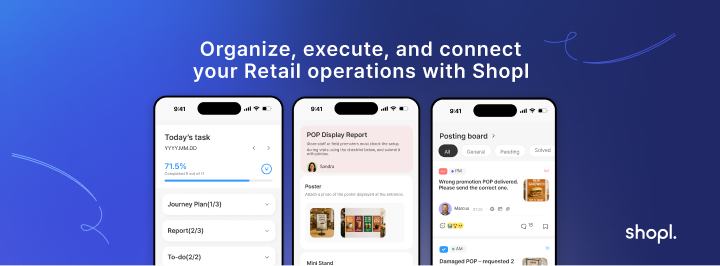
For retail operations seeking comprehensive field management solutions, Shopl offers integrated tracking capabilities that combine GPS monitoring, task management, and performance analytics in a single platform. The system provides real-time visibility into merchandiser activities while supporting teams with mobile-optimized tools for efficient field operations. Learn more about Shopl's field management features and how they can streamline your merchandising operations at Shopl.
Effective merchandiser tracking requires balancing operational visibility with field team support, using technology to enhance rather than complicate daily workflows. Organizations that invest in user-friendly tracking systems while maintaining focus on team development typically achieve the highest return on their merchandising investments. Success comes from choosing platforms that grow with your business needs while providing immediate value to both field teams and management stakeholders.