샤플 이용료 80% 지원 받기

Effective merchandiser reports provide actionable insights that store managers can use immediately to improve product placement, fix compliance issues, and boost category performance. The best reports focus on specific problems with clear next steps rather than generic data dumps that sit unread in email inboxes.
Store managers receive dozens of reports each week, but most merchandiser reports fail to drive meaningful action because they focus on the wrong information at the wrong time.
Many merchandiser reports describe what happened without explaining why it matters or what to do next. A typical gap includes reporting "Planogram compliance at 73%" without identifying which specific products are misplaced or how much sales potential is being lost. These surface-level metrics don't help store teams prioritize their limited time.
Another critical gap occurs when reports arrive too late for corrective action. Finding out about an out-of-stock situation three days after it started means lost sales that could have been prevented with faster communication.
Store managers need reports that answer three key questions: What needs immediate attention? What's working well that should be replicated? What trends are developing that require proactive planning?
The most valuable merchandiser reports highlight 3-5 specific issues with clear urgency levels and provide estimated sales impact for each problem. This approach helps store teams focus on high-impact fixes first.
Effective merchandiser reports should cover the key responsibilities that directly impact store performance and customer experience.
Product placement tracking goes beyond basic planogram compliance. Merchandisers should report on eye-level product positioning, cross-merchandising opportunities, and seasonal display effectiveness. Include specific shelf locations where products are misplaced and estimate the sales impact of each correction.
Document which visual merchandising standards are consistently followed versus areas where store teams struggle. This information helps identify training needs and process improvements.
Stock level reporting should focus on actionable inventory issues rather than raw numbers. Report out-of-stocks with estimated lost sales per day and overstock situations that are tying up valuable shelf space. Include recommended reorder quantities and timing for critical items.
Track slow-moving inventory that may need markdowns or promotional support to clear space for higher-velocity products.
Promotional reporting should verify that sale pricing is accurate, promotional materials are properly displayed, and promotional products have adequate inventory support. Document any promotional execution gaps with photos and estimated impact on promotional lift.
Include feedback on which promotional formats are driving customer engagement versus those that aren't resonating with shoppers.
A structured daily report format ensures consistency and completeness while making information easy to scan and act upon.
Start each report with a brief store condition overview covering cleanliness, organization, and any overnight issues that need attention. Include a priority score (1-3) for overall store readiness and note any factors that might impact the day's merchandising activities.
Document which departments or categories need immediate attention before store opening.
Midday reporting should focus on how products and displays are performing during peak shopping hours. Track customer interaction with new displays, promotional performance, and any emerging inventory issues.
Note which cross-merchandising setups are generating customer interest and which areas customers are avoiding.
Conclude each report with specific action items for store management, including priority levels and recommended completion timeframes. Limit action items to 5-7 maximum to ensure focus and follow-through.
Include any items that need corporate support or supplier intervention.
The right metrics help store teams understand performance trends and identify improvement opportunities.
Include category sales performance compared to targets and previous periods. Focus on categories where merchandising changes can have immediate impact rather than reporting every single SKU performance.
Highlight categories that are over-performing and identify the merchandising factors that may be contributing to their success.
Report planogram compliance with specific details about which products are out of position and the estimated sales impact. Provide compliance scores by department or category to help store teams prioritize their reset activities.
Include photos of major compliance issues to help store teams understand exactly what needs correction.
Track out-of-stock situations with estimated daily sales loss and recommended reorder timing. Report overstock situations that are preventing optimal product mix or blocking new product introductions.
Include vendor contact information for items that need immediate replenishment support.
Several common reporting mistakes can undermine the effectiveness of merchandiser reports and frustrate store teams.
Avoid overwhelming store managers with raw data that requires analysis to understand. Instead of reporting "Category A sales down 12%," explain "Category A underperforming due to competitor promotion and missing key SKUs."
Focus on the 3-5 most important insights rather than trying to cover every possible metric.
Reports that arrive too late for corrective action create frustration and missed opportunities. Establish clear deadlines for report submission based on when store teams can actually respond to the information.
Use mobile reporting tools to submit critical updates in real-time rather than waiting for end-of-day report compilation.
Standardized report templates ensure consistency and completeness while reducing the time required for report preparation.
Integrate merchandising checklists directly into report templates to ensure comprehensive coverage of key areas. Include mandatory photo requirements for specific sections to provide visual confirmation of conditions.
Build in quality controls that prevent report submission if critical sections are incomplete.
Establish clear standards for photo documentation including required angles, lighting conditions, and contextual information. Photos should clearly show both problems and solutions to help store teams understand expectations.
Include before-and-after photos when merchandising corrections are made during the visit.
Implement a consistent priority ranking system that helps store teams triage their response to merchandising issues. Use a simple 1-3 scale where 1 requires immediate attention, 2 needs same-day resolution, and 3 can wait until the next business day.
Include estimated sales impact for each priority level to help justify resource allocation.

Summary reports help identify trends and patterns that daily reports might miss.
Weekly summaries should identify category performance trends and correlate them with merchandising activities. Look for patterns in which merchandising changes drive the strongest sales improvements.
Include recommendations for scaling successful merchandising approaches across other stores or categories.
Monthly reports should compare merchandising performance across stores to identify best practices and improvement opportunities. Highlight stores that are excelling in specific areas and document the merchandising factors that contribute to their success.
Provide specific recommendations for underperforming stores based on successful approaches used elsewhere.
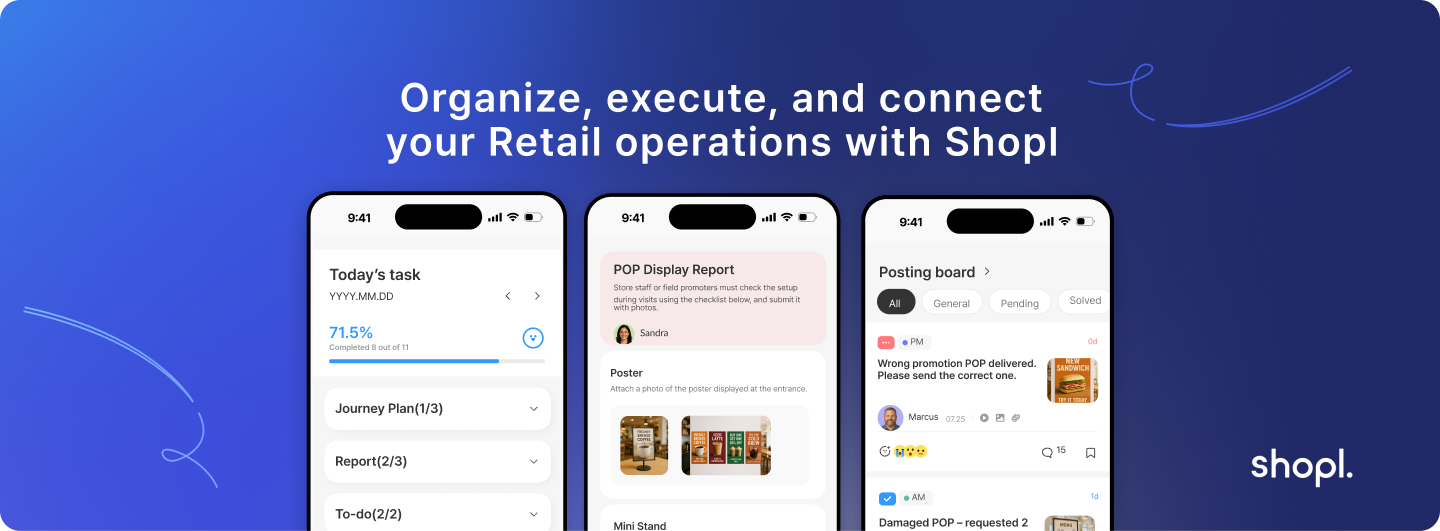
Modern retail management platforms can significantly improve merchandising report quality and timeliness. Shopl's reporting features enable merchandisers to submit detailed reports with photo documentation, priority rankings, and automated follow-up reminders directly from mobile devices. Store managers receive real-time updates with clear action items and can track completion status across their teams. For more information about comprehensive retail reporting solutions, visit Shopl.
A. Daily reports work best for most retail operations, with critical issues reported immediately via mobile alerts. Weekly summary reports help identify trends, while monthly reports provide strategic insights. The frequency should match how quickly store teams can respond to the information.
A. Effective daily reports should be 1-2 pages maximum, focusing on 3-5 key issues with specific action items. Store managers need information they can scan in under 5 minutes and act on immediately. Longer reports often go unread during busy retail operations.
A. Include sales data only when it directly relates to merchandising actions. Focus on category performance, promotional lift, and estimated lost sales from out-of-stocks rather than comprehensive sales reporting. Store managers typically receive detailed sales data from other sources.
A. Digital tools enable real-time reporting with photo documentation, automated compliance scoring, and immediate alert distribution. Mobile apps allow merchandisers to submit reports from the store floor with location data and timestamp verification, improving report accuracy and timeliness.
A. Merchandiser reports focus on product placement, visual standards, and inventory optimization, while sales rep reports emphasize customer relationships, order generation, and account management. Merchandiser reports are typically more operational and immediate, while sales reports are more strategic and relationship-focused.
Effective merchandiser reporting transforms store visits from routine check-ins into strategic improvement opportunities. The best reports provide store teams with clear priorities, specific action items, and the context they need to make smart decisions about their limited time and resources. Focus on quality insights over quantity of data, and always consider how busy store managers will actually use the information you provide.