샤플 이용료 80% 지원 받기
%20%E1%84%86%E1%85%A6%E1%84%8B%E1%85%B5%E1%86%AB.jpg)
In apparel retail, the Merchandiser (MD) sits at the intersection of product planning, inventory management, and sales strategy. While a buyer focuses on what to source, an MD designs the full picture — what to sell, how much, at what price, when, and where — acting as the critical link between head office and the store floor. In practice, the two roles often overlap, and the exact scope varies by company. This guide breaks down what an apparel MD actually does, what skills the role demands, and how to tackle the operational challenges that come with bridging HQ and stores.
"MD" is short for Merchandiser — the person responsible for planning, curating, sourcing, and managing a product range from concept through to sale. In the apparel industry, the MD is broadly accountable for product planning, assortment, Inventory, and sales strategy.
At its core, the MD's job is to ensure the right products are available in the right quantities, at the right Price, at the right time, and in the right place. Every decision connects back to the fundamental question: what do we sell, how much of it, at what price, when, and through which channels?
But an MD doesn't simply pick products — they engineer the conditions for products to sell. That requires both analytical rigor and market intuition, making it one of the more demanding roles in the industry.
The MD role is frequently confused with buyers and designers. The table below outlines how these roles typically differ — though in smaller organizations, one person often covers more than one of them.
In some companies, the MD and buyer are the same person — but regardless of structure, the MD's defining purpose is building a plan that drives sell-through.
▪︎ Product Planning and Assortment Strategy
Each season, the MD determines which product Categories to carry, in what volumes, and at which price points. This means combining historical Sales data, trend intelligence, and customer insights to build a coherent assortment plan before a single item goes on the floor.
▪︎ Product Development and Vendor Collaboration
Beyond planning, MDs often work directly with manufacturers and suppliers to co-develop products — weighing in on materials, specifications, and price positioning from the earliest stages. This is where the MD's role can overlap significantly with that of the buyer, depending on how a company is structured.
▪︎ Inventory Management and Sales Analysis
Once products hit the floor, the MD's work is far from over. Tracking the gap between sell-through performance and Inventory levels on a Weekly and Monthly basis — and then coordinating with other teams on reorders, markdowns, or stock transfers — is where a lot of the real work happens. Too much stock eats into margins through markdowns; too little means lost sales. Managing that balance is central to profitability.
▪︎ Sales Planning and Promotional Alignment
No MD operates in isolation. Effective sales planning requires close coordination with marketing, e-commerce, and Store teams. The MD's job is to define when, where, and at what Price each product should be pushed — and then make sure every stakeholder is aligned and ready to execute.
▪︎ Store Rollout Direction
Getting a plan from head office to the store floor is harder than it sounds. Display placement, facing counts, product prioritization — in some organizations, the MD is directly responsible for issuing rollout instructions to stores. In others, that falls to VMD or Store operations teams. Knowing clearly who owns what in your organization is essential to ensuring nothing falls through the cracks.
An MD's job isn't about stocking shelves with appealing products and hoping for the best. The role is tied directly to seasonal budget targets, gross margin goals, and sell-through rates. MDs are expected to track the gap between plan and Actual performance — in Numbers — and drive a response. The exact decision-making authority varies by company, but accountability to the numbers is a constant.
What's selling, what's sitting, and what customers are saying on the floor — this is the intelligence that shapes the next season's plan. When MDs actively collect and act on store-level feedback, they keep strategy grounded in reality rather than assumptions. In organizations where information only flows one way — from HQ down — this feedback loop tends to break down, and plans start to miss the mark.
▪︎ Data Analysis and Numbers Management
MDs work with sales figures, Inventory levels, sell-through rates, and gross margin percentages on a daily basis. The ability to pull meaning out of a spreadsheet — spotting a problem before it becomes a crisis — is table stakes. Some organizations use BI tools or dedicated planning systems, but the depth of tooling depends on company size and maturity.
▪︎ Trend Awareness and Product Knowledge
Knowing where the market is heading — and how your Brand sits within it — is what allows an MD to make confident calls about what will sell next season. That means staying across fabric trends, construction details, color directions, and how they connect to your customer.
▪︎ Communication and Cross-Functional Coordination
MDs work across buyers, designers, store staff, and marketing teams simultaneously. The ability to get people moving in the same direction — not just issuing directives, but building genuine alignment — is what separates a good MD from a great one.
▪︎ Project Management and Schedule Execution
Running multiple product lines in parallel across a season Calendar demands rigorous Schedule discipline. Deadlines for orders, delivery windows, and store rollout dates don't wait — and missing one can create a cascade of problems downstream.
Even a well-crafted rollout plan fails if stores don't receive it clearly. When instructions get scattered across WhatsApp messages, Emails, phone calls, and printed sheets, it becomes nearly impossible to ensure every Store understands exactly what they're supposed to do, by when. The result: inconsistent execution across locations, and no clear way to tell who has and hasn't acted.
Sending an instruction is one thing. Confirming it's actually been carried out — across every Store — is another. When follow-up means contacting each location individually, MDs end up spending time they should be devoting to product planning and Sales data analysis on administrative chasing instead. Having a centralized way to see the status of every outstanding instruction is the first step toward eliminating that drain.
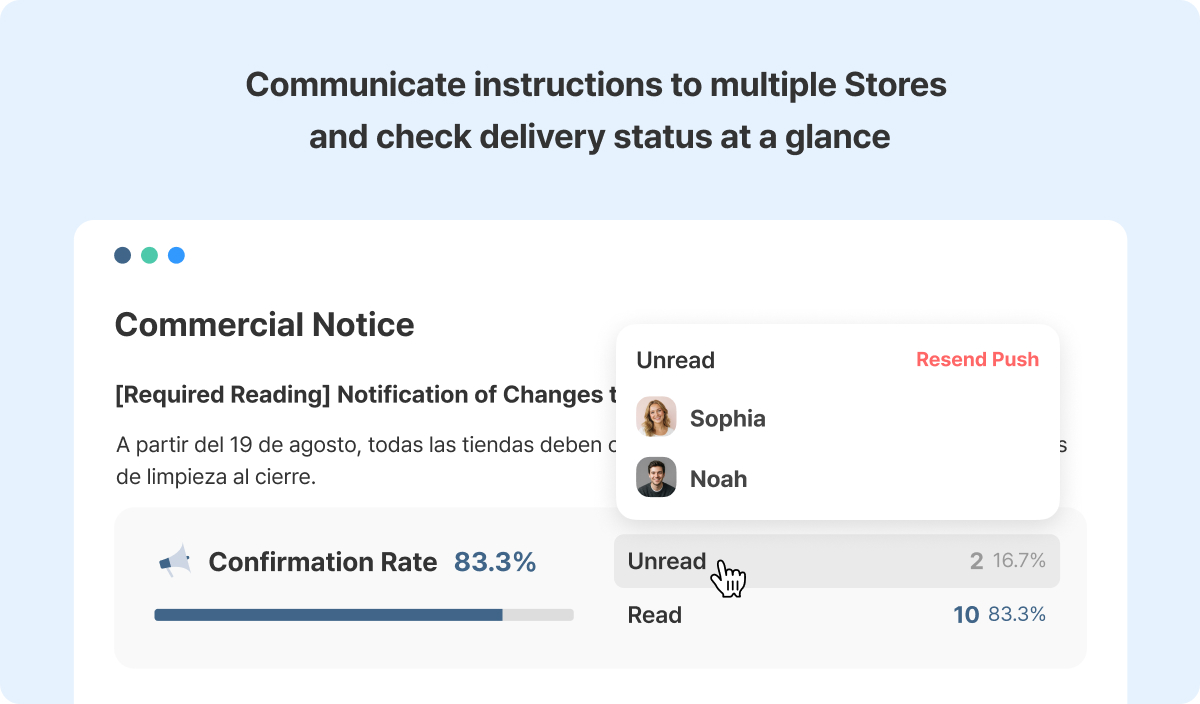
With Shopl, MDs can broadcast product rollout instructions to multiple stores at once, attaching Files and Images to give store teams exactly what they need. Read receipts show who has and hasn't opened the message, and a Resend option lets you follow up with non-readers directly — no more manual check-ins to confirm delivery.
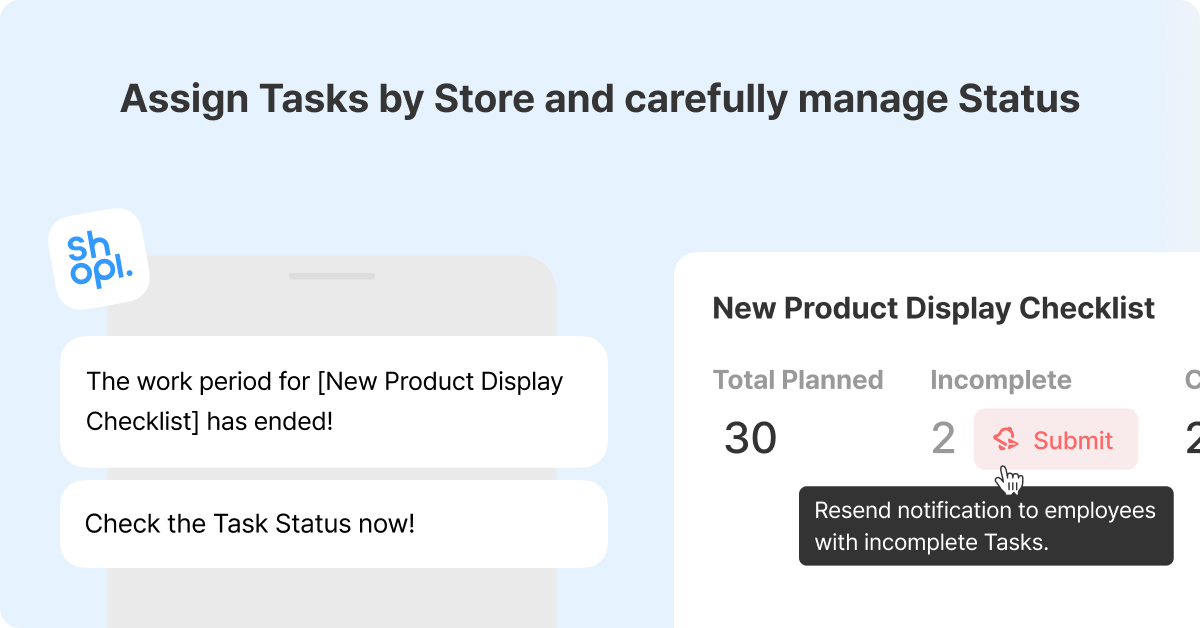
When a rollout instruction needs to translate into specific actions at store level, To-do lets you assign those tasks by staff member and monitor progress in real time. HQ can see at a glance which stores have Completed their tasks and which are still pending — making it easy to spot gaps and follow up before deadlines are missed.
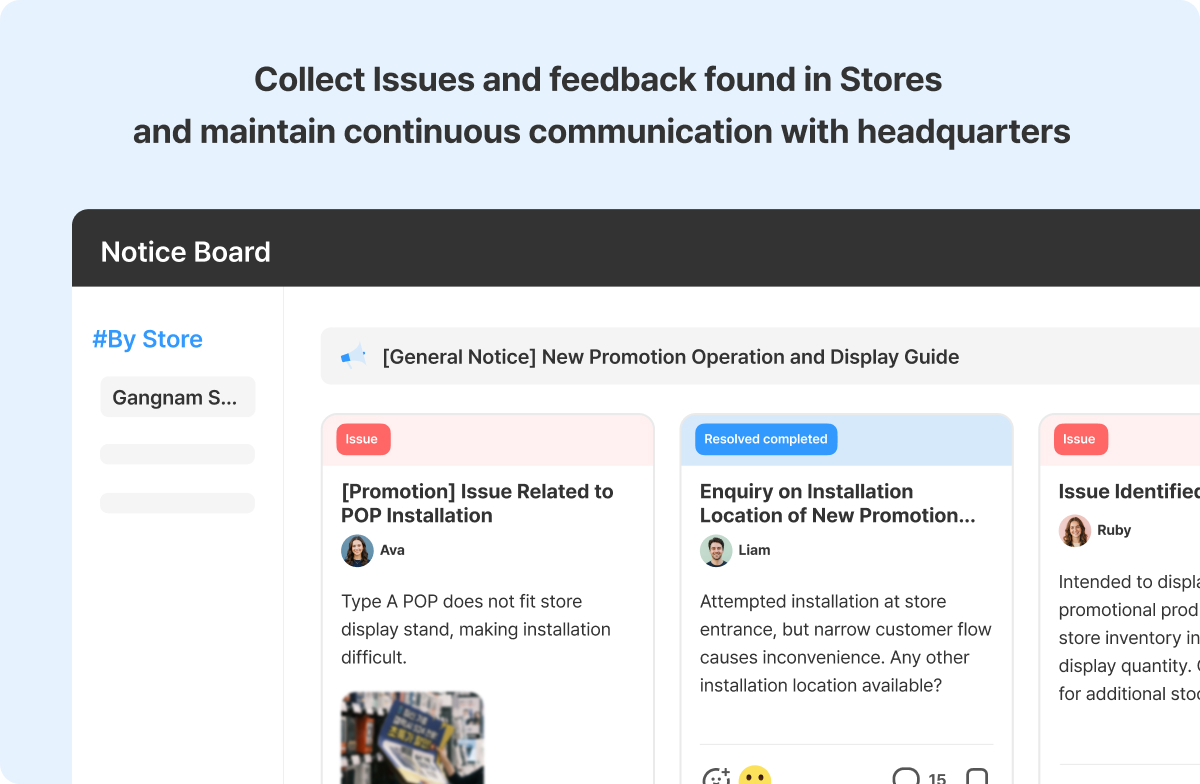
Once a product hits the floor, stores often surface unexpected Issues — customer reactions, operational friction, questions about the display. Shopl's Posting board brings all of that feedback into one place, replacing the fragmented WhatsApp threads and side conversations that typically scatter store input. MDs can review Comments, respond through the same channel, and feed that ground-level intelligence directly into future product decisions.
A. In general, a buyer's focus is on selecting and negotiating which products to source. An MD's scope is broader — covering product planning, assortment, Inventory, and sales strategy across the full product lifecycle. That said, the two roles frequently overlap in practice, and the boundary between them depends heavily on company size and structure.
A. The MD function — product planning, assortment curation, Inventory management, sales forecasting — is necessary at any scale. In smaller operations where a dedicated MD isn't feasible, the store owner or manager often absorbs the role. The starting point is simple: build the habit of reviewing Sales data and Inventory figures regularly, and make decisions based on what the Numbers tell you.
A. The list is long — buyers, designers, marketing, e-commerce, store staff, and area managers (SVs) among them. But the most critical relationship is often with stores. Getting the "HQ plans → store executes" cycle to actually function requires a real information-sharing structure, not just top-down directives. MDs who build genuine two-way communication with store teams — receiving feedback as well as giving instructions — are the ones whose plans hold up in the real world.
The MD's role doesn't end when the plan is written. A plan only delivers results when every store executes it consistently — and when the feedback generated on the floor feeds back into the next planning cycle. Without that loop, even the most carefully built strategy starts to drift from reality.
For multi-location retailers, the operational challenge is clear: how do you keep instructions, execution tracking, and store feedback connected rather than scattered? When those things live in separate channels — individual WhatsApp chats, Email threads, manual spreadsheets — the information gap between HQ and stores grows quietly until it becomes a real problem.
Shopl's Notice, Survey, To-do, and Posting board features give MDs a single environment to push instructions out, confirm they've been acted on, and collect the store-level input that makes the next plan sharper. If you're looking to close the gap between what HQ plans and what actually happens on the floor, building the right operational structure between head office and stores is where to start.